Explorer & naturalist / Venezuela
Charles Brewer-Carías
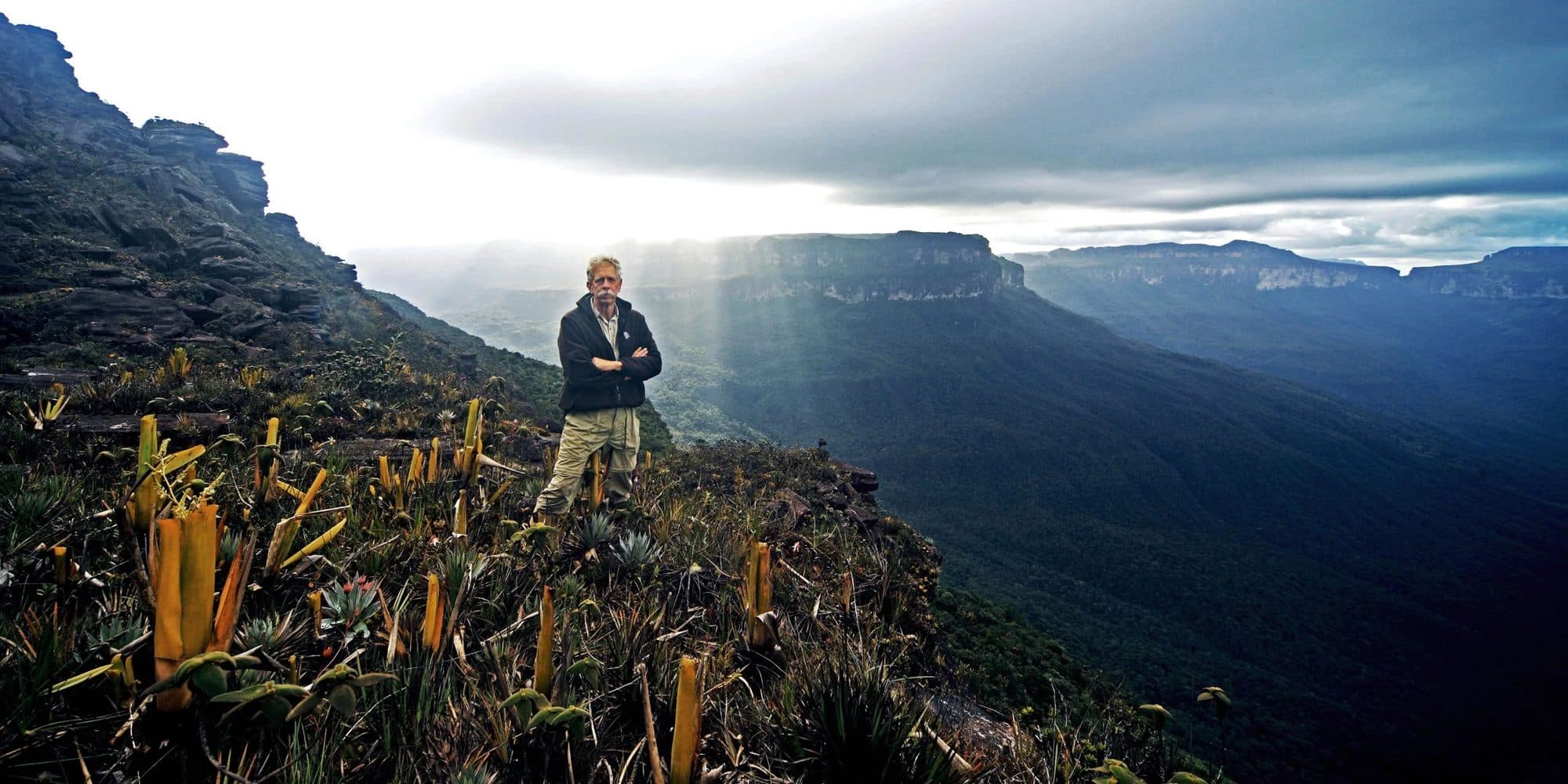
Explorer and naturalist of the Guayana Highlands.Brocchinia bromeliads on a tepui, the Muchimuk region
Photo: Federico Mayoral
Charles Brewer-Carías has led more than two hundred expeditions into the Guayana Highlands of Venezuela. This exhibition follows one of them: the sinkholes of Sarisariñama, and the life hidden inside.
Images from charles-brewer-carias.com.
About the explorer
Charles Brewer-Carías
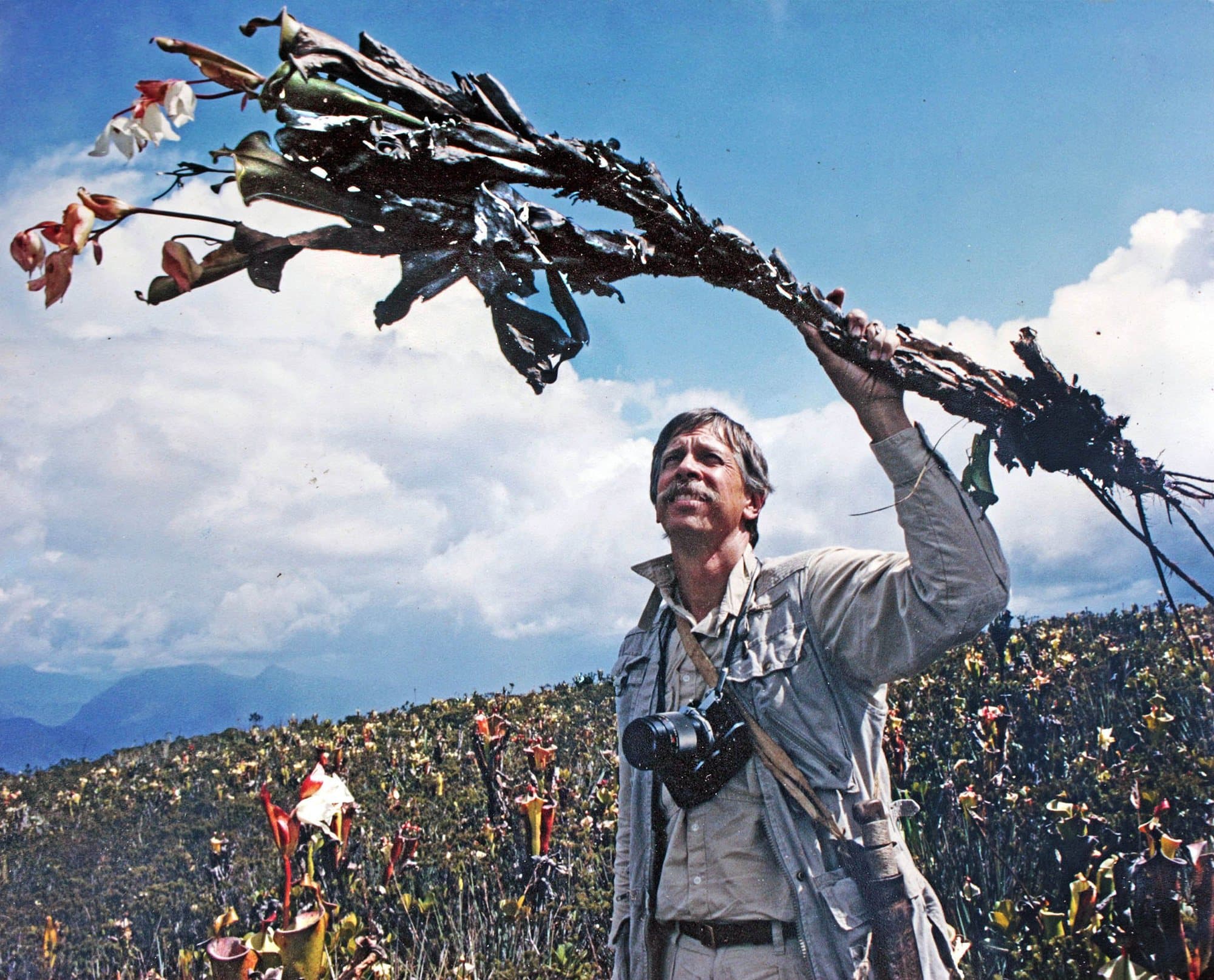
Born in Caracas in 1938, Brewer-Carías trained as a dentist and became one of Venezuela’s best-known explorers and naturalists. His work on the tepuis, the table mountains of the Guayana Highlands, spans botany, zoology, geology and anthropology.
Species and a bromeliad genus, Brewcaria, carry his name. In 2025 he received the Paez Medal of Art for his work as a naturalist, ethnographer and explorer.
- Born
- 10 September 1938, Caracas
- Trained as
- A dentist, before a life of exploration
- Expeditions
- More than 200 into the Guayana Highlands, many of them to the tepuis
- Named for him
- Some 27 to 28 species, and the bromeliad genus Brewcaria
- Recognition
- Paez Medal of Art, 2025, from the Venezuelan American Endowment for the Arts
Images are from the explorer’s website, where some are credited to other photographers. Reproduction is not permitted without the owners’ consent.
All artists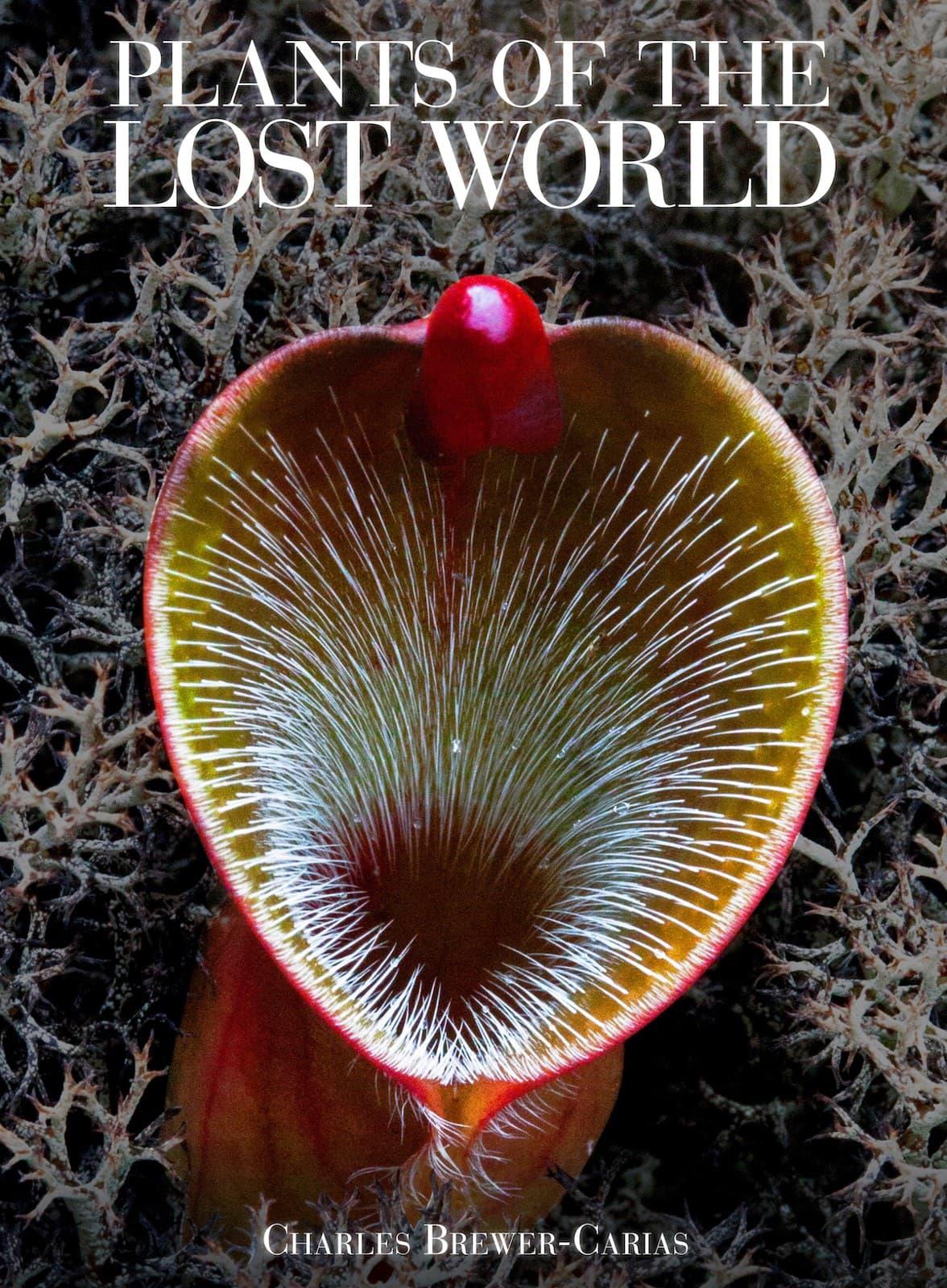
The book
Plants of the Lost World
Six decades of exploration, gathered into one large-format volume on the plants of the tepuis. Brewer-Carías first wrote it in Spanish, and Redfern Natural History published it in English in 2024: a 464-page hardcover, 350 × 240 mm, with about 530 photographs.
It opens with the biogeography and the history of discovery of the tepuis, then turns to carnivorous plants, bromeliads, orchids, ferns, lichens and mosses, with aerial views of the plateaus themselves. Many of the species appear in print for the first time.
Cover image © Redfern Natural History. Reproduction is not permitted without the owners’ consent.
See it at Redfern Natural History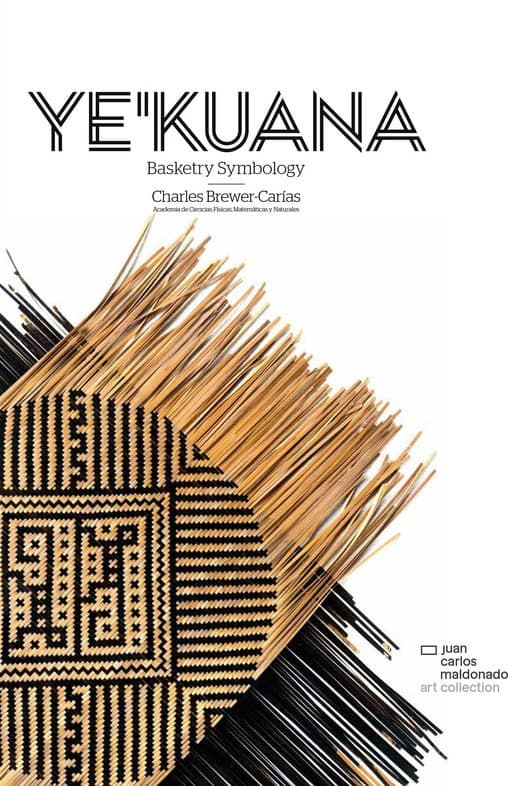
The book
Ye’kwana Basketry Symbology
Ye’kwana Basketry Symbology: Portal to a Parallel World was published in 2019 by the Juan Carlos Maldonado Art Collection. It is a 470-page hardcover, with English and Spanish editions, carrying a prologue by Juan Vicente Carrillo-Battala Mattar and photography by Fanny Brewer, Brewer-Carías, Javier Mesa and Ignacio Benavides.
The book investigates the culture and cosmogony of the Ye’kwana people through their woven baskets: the creation stories, the animals and plants, and the symbols that decorate them. The research and texts are Brewer-Carías’s.
Cover image © Juan Carlos Maldonado Art Collection. Reproduction is not permitted without the owners’ consent.
See it at the Juan Carlos Maldonado Art CollectionExpedition spotlight
Sarisariñama
On the Sarisariñama plateau in Bolívar State, the ground falls away into enormous sinkholes. Radar imaging in 1972 first revealed their shape, and in 1974 Brewer-Carías led the first multidisciplinary scientific expedition into them.
- Where
- Sarisariñama plateau, Bolívar State, at about 1,350 m
- The largest pit
- About 352 m across at the mouth and 350 m deep, according to his site
- 1974
- A 20-member expedition. Three climbers went down: Brewer-Carías, his brother Jimmy and David Nott
- Found there
- Nearly 100 new species, and the largest known colony of oilbirds (guácharos)
- 2002
- He returned with photographer Mark Moffett, herpetologist César Barrio-Amorós and family
Chapter 01
Sarisariñama
The plateau and its sinkholes, from the air.
Chapter 02
Life in the pit
Oilbirds, the palm seeds they carry, and the plants that cling to the cliffs.
Chapter 03
Maps and sections
How the sinkholes were located, measured and understood.
Chapter 04
The highlands
One of the larger residents of the tepui.
How he works
An explorer in the old tradition.
A natural historian of the old school
His own site describes him as an encyclopedist, in the tradition of the great naturalist-explorers, rather than a narrow specialist. He has been called the “Humboldt of the twentieth century”.
Expeditions with many disciplines
His trips bring botanists, zoologists, geologists and anthropologists together, and his publications cover botany, zoology, entomology, geology, geography and anthropology.
Go and see
In 1974 he was one of three climbers who descended into the pit of Sarisariñama. He has spent decades reaching places few people had ever seen.
Timeline
Decades in the field.
- 1938
Born in Caracas.
- 1971
Discovers the caves of Cerro Autana, and begins his study of the carnivorous Heliamphora pitcher plants on Cerro de la Neblina.
- 1972–73
Publishes papers on the ecological niche of Heliamphora and on the carnivorous plants of Cerro de la Neblina.
- 1974
Leads the first multidisciplinary expedition to the Sarisariñama sinkholes.
- 1983–87
Leads a long biodiversity expedition to Cerro de la Neblina, which his site calls the largest of its kind.
- 2002
Returns to Sarisariñama with a National Geographic photographer and his family.
- 2025
Receives the Paez Medal of Art.
Sources
This profile is compiled from the explorer’s public website and Wikipedia, and written in our own words. Figures that differ between sources are given as “more than” or attributed.
Articles
Read more about Charles Brewer-Carías
Wrote or found a piece about Charles Brewer-Carías? Send it to us, or read our stories.