Locally fairly common but skulking; small range confined to the central Coastal Range. Voice is heard far more often than the bird is seen, but it is one of the more obtainable Coastal Range endemics with patience and playback.
Field marks
Large Synallaxis (16-18 cm), mostly rich rufous/rufescent overall with a slightly paler chin and a solid black throat patch — the diagnostic mark. Dark reddish-brown iris, blackish bill, blue-gray legs. The combination of bright rufous body and clean black throat is unmistakable in range.
Habitat
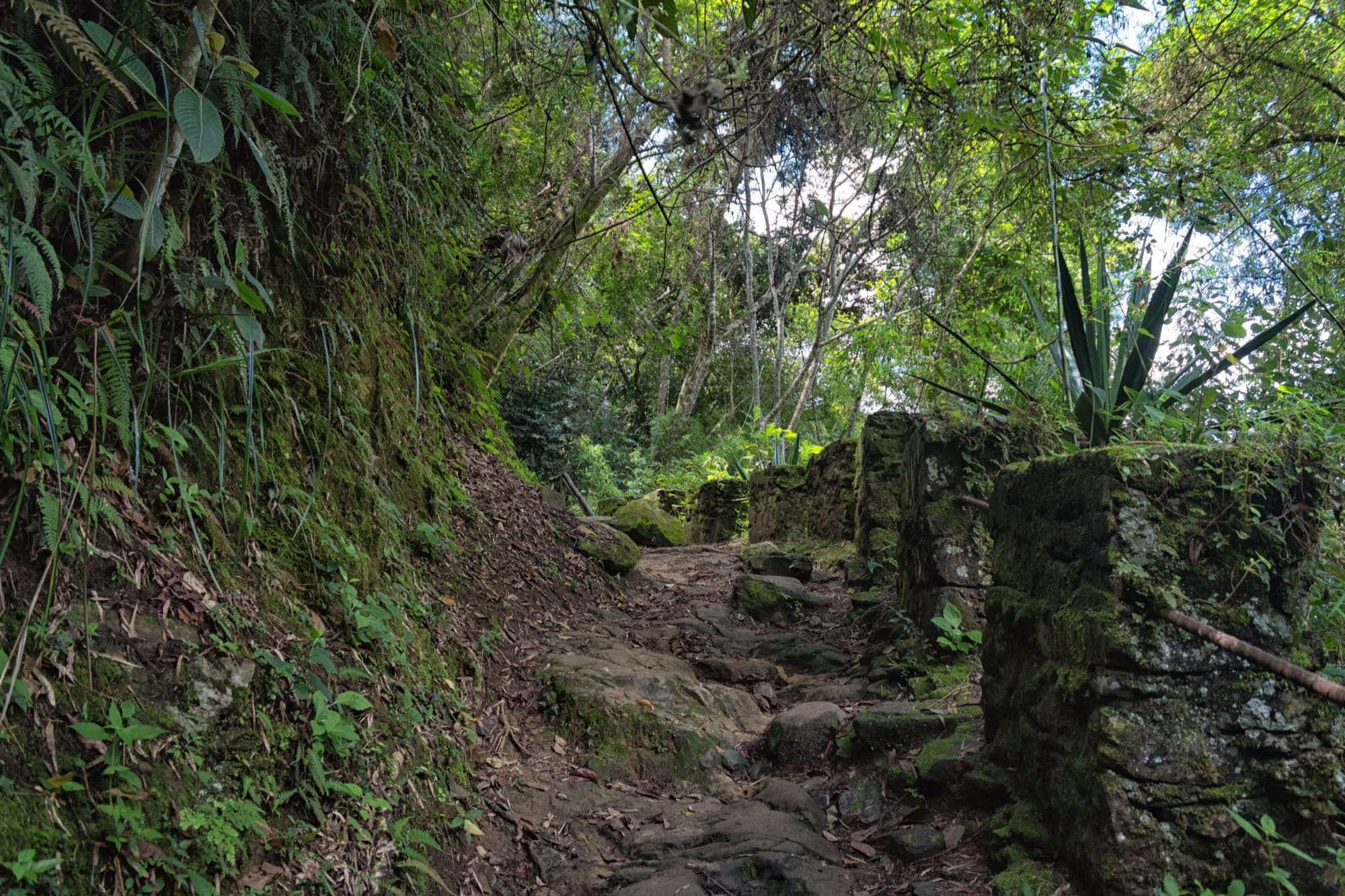
Montane evergreen (cloud) forest, secondary forest, and dense undergrowth and edges of cloud forest, 1,300-2,200 m.
Behavior
Resident year-round; usually in pairs, gleaning prey from foliage and small branches low (up to ~2 m). Skulks in dense undergrowth and tangles, typically detected by its loud call.
Voice
Call a loud, sharp 'ki-kík' (typical sharp two-note Synallaxis call); also gives churring/scolding notes. Recordings on Xeno-canto and Macaulay Library — search 'Synallaxis castanea'.
Rufous Spinetail (Synallaxis unirufa) — very similar rufous spinetail but lacks the solid black throat; check throat carefully (treated as a near-relative, even lumped historically)
Pale-breasted / Stripe-breasted spinetails — paler, streaked or with contrasting underparts; black-throated is uniformly rufous with the black bib
Other dark understory furnariids — separate by the bright rufous tone plus black throat and the sharp 'ki-kík' call
Guide note
Find it by call: stop where the loud 'ki-kík' rings out of a tangle, play sparingly, and watch a low gap — it slips through undergrowth and often crosses a trail at knee height. Tell clients the one mark that matters is the black throat against the rufous body, since Rufous Spinetail-type birds can cause doubt. A staple of any Rancho Grande / Portachuelo morning.