Menu
Not a rating. Not a ranking. A recognition: the restaurants, fondas, and food stalls in Venezuela that are worth building a trip around.
The gold standard. Restaurants that represent the absolute pinnacle of Venezuelan cuisine -- extraordinary cooking, impeccable ingredients, and a dining experience worth traveling for.

Carlos García is a Latin America's 50 Best veteran who has quietly become one of the continent's most important chefs. Alto is his flagship — a contemporary Venezuelan restaurant where Barlovento cacao, Andean trout, and coastal pargo meet Mediterranean technique. The eight-course tasting menu changes with the seasons, but the philosophy stays constant: Venezuelan ingredients deserve a global stage.
View Details
A single-protein obsession elevated to high art. Issam Koteich's lamb-only concept in Las Mercedes has earned its spot at #29 on Latin America's 50 Best Restaurants, and every plate explains why. From dry-aged loin with smoked eggplant to slow-braised shoulder with cacao mole, Cordero proves that constraint breeds creativity. The room is dark, intimate, unapologetic.
View DetailsThe soul of the kitchen. Family-run fondas, seasoned cooks, and the kind of places where the food tastes like someone cared. Tradition done right.

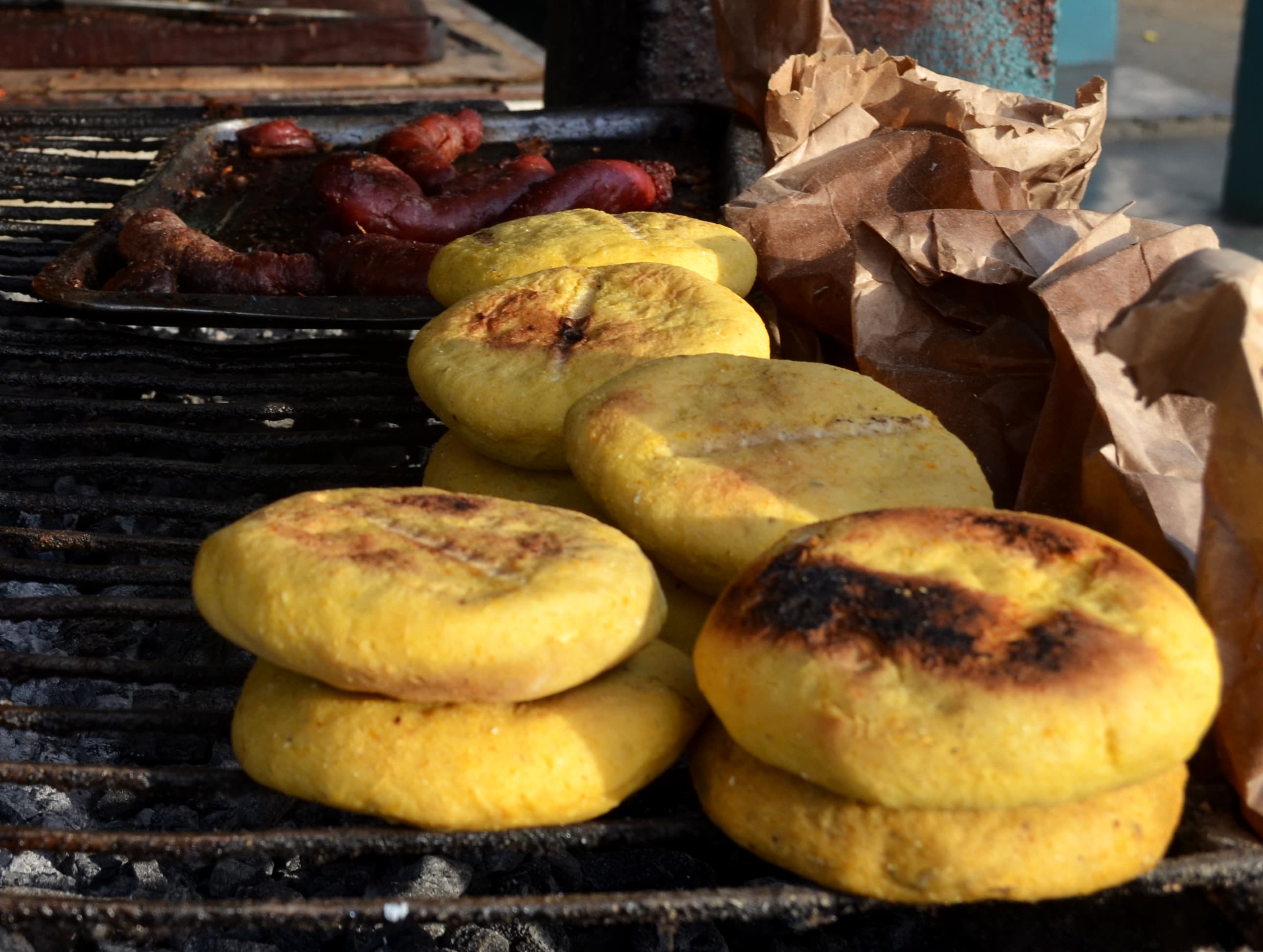
There is no reservation system. There is no dress code. There is a line at 3 AM and another at 7 AM, and at both hours the arepas are perfect. Budare is a 24/7 Caracas institution that has been stuffing corn flatbreads with reina pepiada, pabellón, and queso de mano for decades. The cachapas arrive golden, sweet, folded around melting cheese. This is the restaurant that every Venezuelan expat misses most.
View Details
If you ask a caraqueño where to eat the best cachapa in the city, the answer is Doña Inés — and they'll say it like you should have already known. The sweet corn pancakes here are thick, golden, and almost obscenely generous with queso de mano. The atmosphere is no-frills, the portions are enormous, and the experience is pure Venezuelan comfort. Come hungry. Leave changed.
View Details
Perched above the fishing boats of Juan Griego, La Fosforera serves the kind of seafood that only exists when the kitchen is thirty meters from the dock. Whole pargo rojo grilled over coals, langostinos in garlic butter, and their legendary pastel de chucho — a layered casserole of stingray, plantain, and cheese that is Margarita's greatest contribution to Venezuelan cuisine. Watch the sunset paint the bay orange while you eat. This is why people come to the island.
View DetailsThe ones to watch. Young chefs, bold concepts, and the restaurants pushing Venezuelan cuisine into new territory. Not yet proven by time, but impossible to ignore.
Eduardo Castañeda is part of a new generation of Venezuelan chefs who refuse to choose between tradition and innovation. At La Guayaba Verde, a hallaca becomes a fine-dining course without losing its soul. Fermented ají dulce appears in unexpected places. Andean potatoes get the same reverence as a French chef's truffle. The space is small, the wine list is South American, and the energy is that of a restaurant that knows exactly what it wants to become.
View Details
In a colonial house on a Mérida side street, Páramo Cocina is doing something quietly revolutionary: building a restaurant entirely around what grows within a day's drive. Rainbow trout from mountain streams, cheese from neighboring farms, coffee from the valley below. The menu changes when the ingredients change. Wood-fired everything. The pisca andina — a poached-egg soup traditionally eaten at dawn by farmers — becomes a first course that sets the tone for an evening of altitude-influenced cooking you won't find anywhere else in the country.
View DetailsLa Mesa de VAV is not a star system. It is not a score. It is a short list of the restaurants and food stalls that we believe are worth the trip — places where the food tells the story of a country better than any guidebook.
Selections are made by Los Jurados: a rotating panel of Venezuelan food writers, chefs, and culinary historians who eat anonymously, pay their own bills, and argue about the results until consensus emerges.
We recognize three tiers. Mesa de Oro is the gold standard — extraordinary restaurants worth a detour. Criolla honors the family kitchens and traditional fondas that are the backbone of Venezuelan cuisine. Nueva spotlights the newcomers and rule-breakers pushing the cuisine forward.
No restaurant pays for inclusion. No restaurant knows when the panel visits. The only currency is the food on the plate.
The panel is anonymous by design. We publish the methodology, not the members. Selections are updated annually.