Locally fairly common and reliable within its Andean cloud-forest range; readily seen at feeders and flowering banks at the right elevation. A relatively easy Venezuelan endemic compared with the NE-montane species.
Field marks
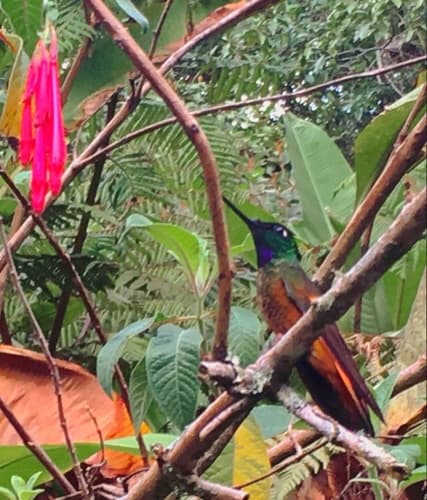
Medium-large, long-straight-billed Coeligena. Male glittering green overall with a glittering green frontlet (forecrown), a small violet/blue throat-gorget patch, and a distinctive golden-orange/coppery rump and golden-bronze tail (the 'golden' name). Females duller green above, throat cinnamon-buff spotted green, underparts buffy with golden scaling. The golden rump/tail and long straight bill separate it within range.
Habitat
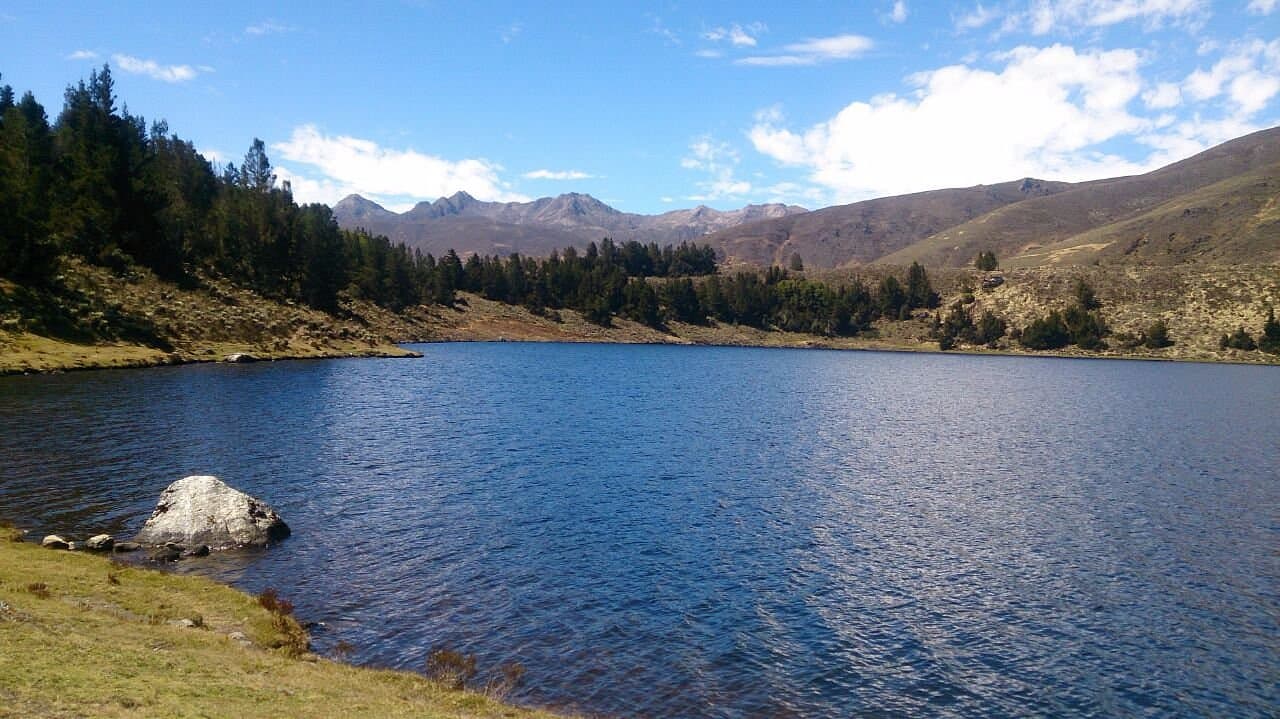
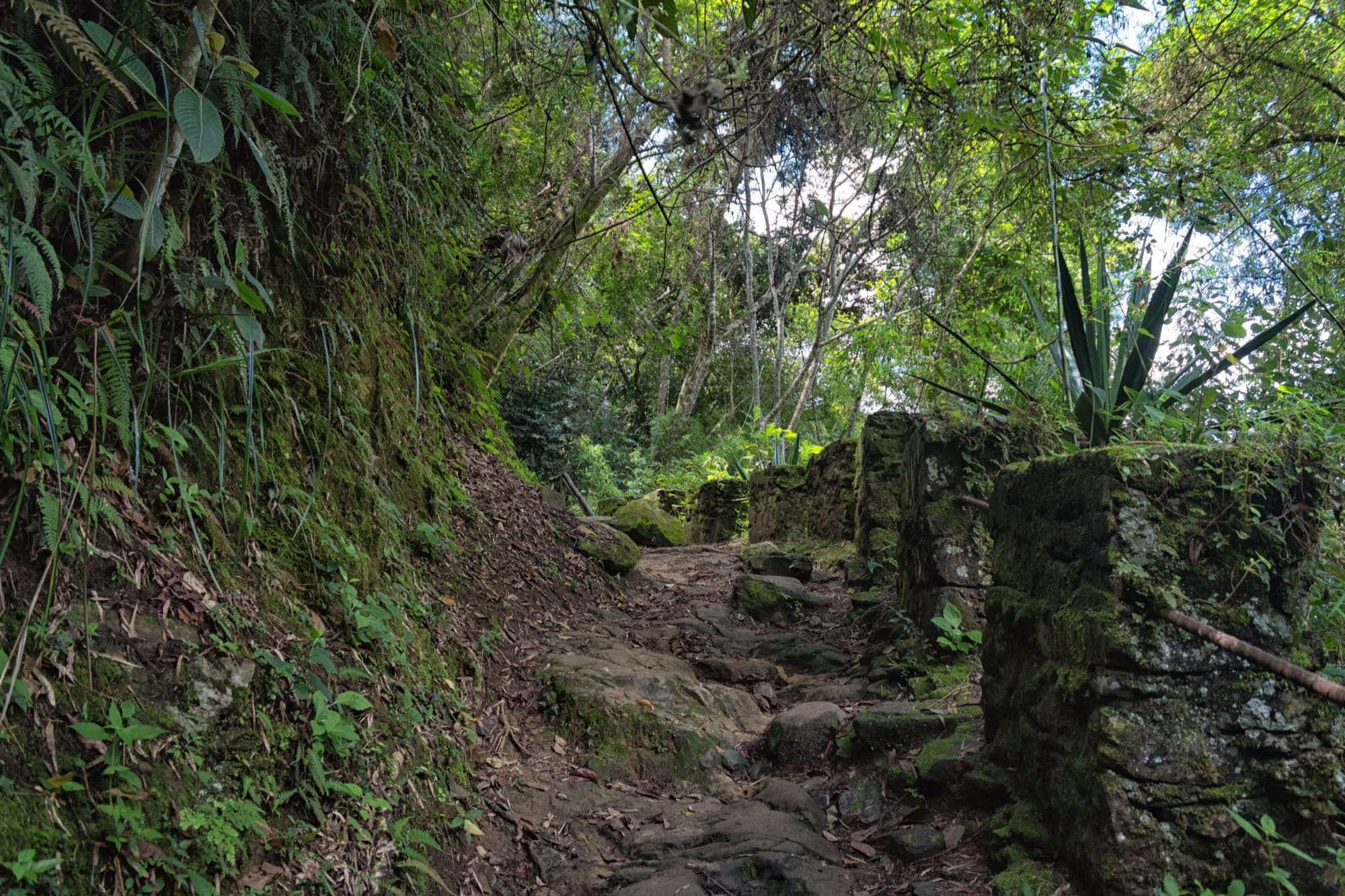
Interior and edge of humid Andean montane and cloud forest, dwarf forest and adjacent scrub with flowering banks; roughly 1,400–3,200 m.
Behavior
Traplines flowering shrubs, Inga, bromeliads and tubular blooms at low to mid levels along forest edge and banks; comes readily to sugar-water feeders where present. Often pugnacious at flower patches.
Voice
High, dry chip/tsit notes and twittering chases; no musical song. Search Xeno-canto / Macaulay Library for 'Coeligena eos', 'Merida Starfrontlet', or 'Golden-tailed Starfrontlet'; also browse the 'Coeligena' genus to learn the chip type.
Bronzy Inca and other Coeligena/incas — lack the golden-orange rump and bright frontlet
Long-tailed Sylph and Andean emeralds share habitat but differ in shape, bill length and color
Female could be confused with female Tyrian Metaltail or female Speckled Hummingbird — note long straight bill, larger size and golden scaling
Guide note
The most 'showable' of the Andean hummingbird endemics — stake out feeders or a flowering bank at La Mucuy or La Azulita and you can usually get prolonged scope/photo views. Point clients to the golden rump catching the light, which is the diagnostic the name promises and the photo everyone wants.