Uncommon and skulking; vocal but reluctant to show. Range-restricted to the NE coastal cordillera. Often heard far more than seen — expect to work for clean views. Locally regular on the right trails.
Field marks
Striking ~19 cm brushfinch: black crown with a white supercilium behind the eye, olive-green upperparts, white throat bordered below by a black chest band, and white breast/belly with gray flanks. The clean black-and-white head pattern plus the black gorget band over white underparts is diagnostic.
Habitat
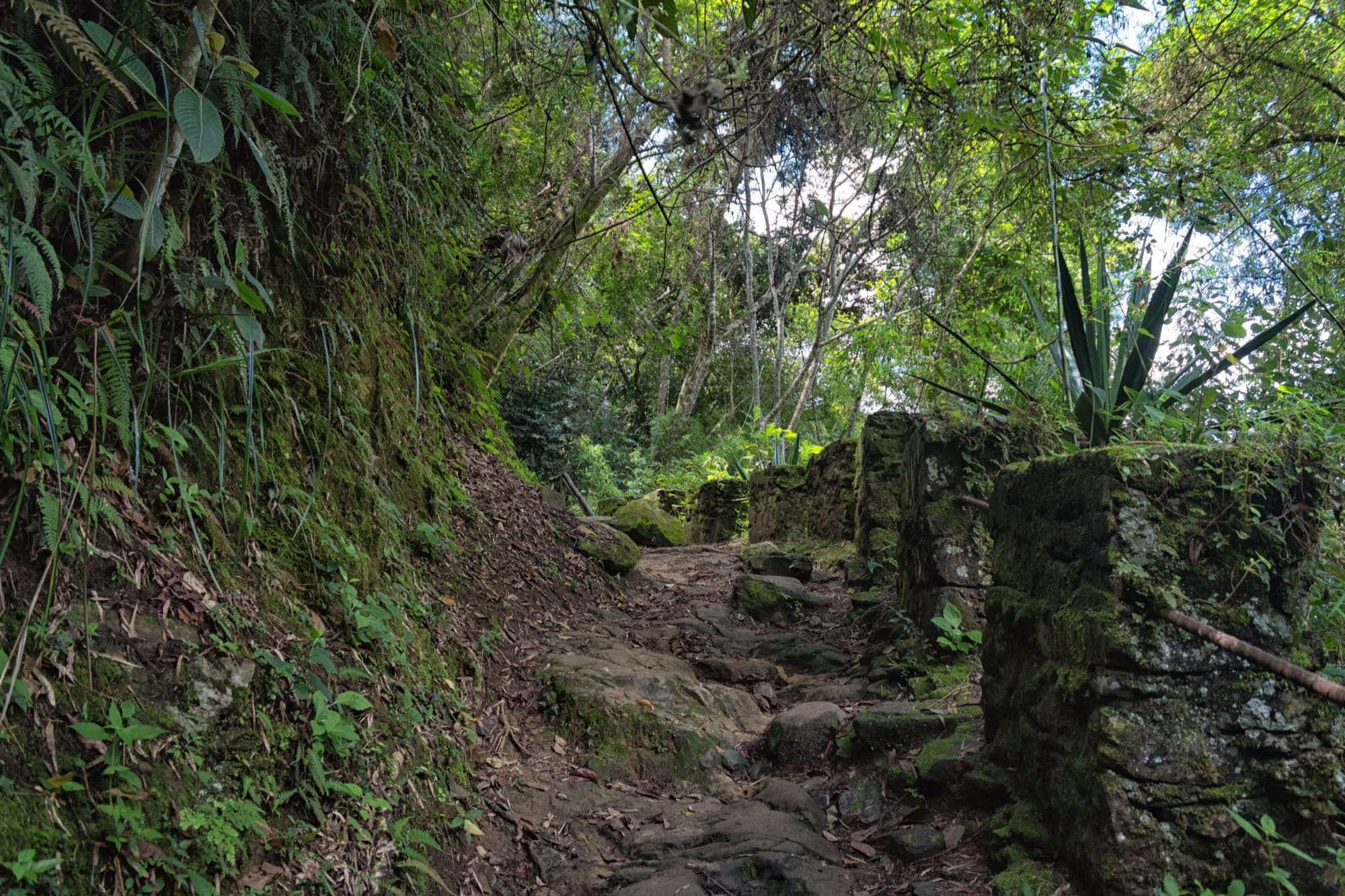
Dense understory and edges of humid montane forest, second growth, and shade-coffee plantations, roughly 900-1,500 m (locally down to ~300 m at edge) in the Turimiquire and Paria highlands.
Behavior
Terrestrial to mid-level skulker; forages on or near the ground in dense cover, singly, in pairs, or in small family groups. Stays in thick vegetation and is hard to coax into the open.
Voice
A high-pitched, sibilant, rambling song with no well-defined breaks; thin, very high call notes. Recordings: search 'Paria Brushfinch' or 'Arremon phygas' on Xeno-canto and Macaulay Library (older files may be filed under Buarremon/Atlapetes).
Other 'stripe-headed' / Buarremon-Arremon brushfinches were formerly lumped with it (it was split out of the Stripe-headed/Buarremon torquatus complex ~2010-2011) but none overlap in NE Venezuela, so range plus the black breast band confirm it.
Tepui Brushfinch (Atlapetes personatus) is a different bird far to the south in the tepuis — no overlap.
Guide note
Locate it by its thin high song along the Cerro Humo trail, then be patient at understory gaps and edge tangles — it routinely sings unseen, so prep clients that it is a 'heard-then-glimpsed' bird. Combine the visit with Paria Whitestart and Scissor-tailed Hummingbird on the same ridge for an efficient Paria-endemics morning.