Menu
The canon of Venezuelan street food. No reservations, no tablecloths, no pretension — just the food that feeds a nation.
In Venezuela, the best meal of the day often costs two dollars and comes wrapped in wax paper. The arepa lady on your corner has been doing this for thirty years. Her technique is flawless. Her patience is infinite. Her food is better than most restaurants.
This is not street food as a trend. This is street food as a way of life — the backbone of how Venezuelans eat, from the morning cachapa to the late-night perro caliente. Every entry here is a dish worth learning about before you eat it, and worth seeking out once you arrive.
“The best food in the world is made by people whose names you’ll never know, in places you’ll never read about. That doesn’t make it less important. It makes it more.”
The dishes that define Venezuelan street eating.
 staple
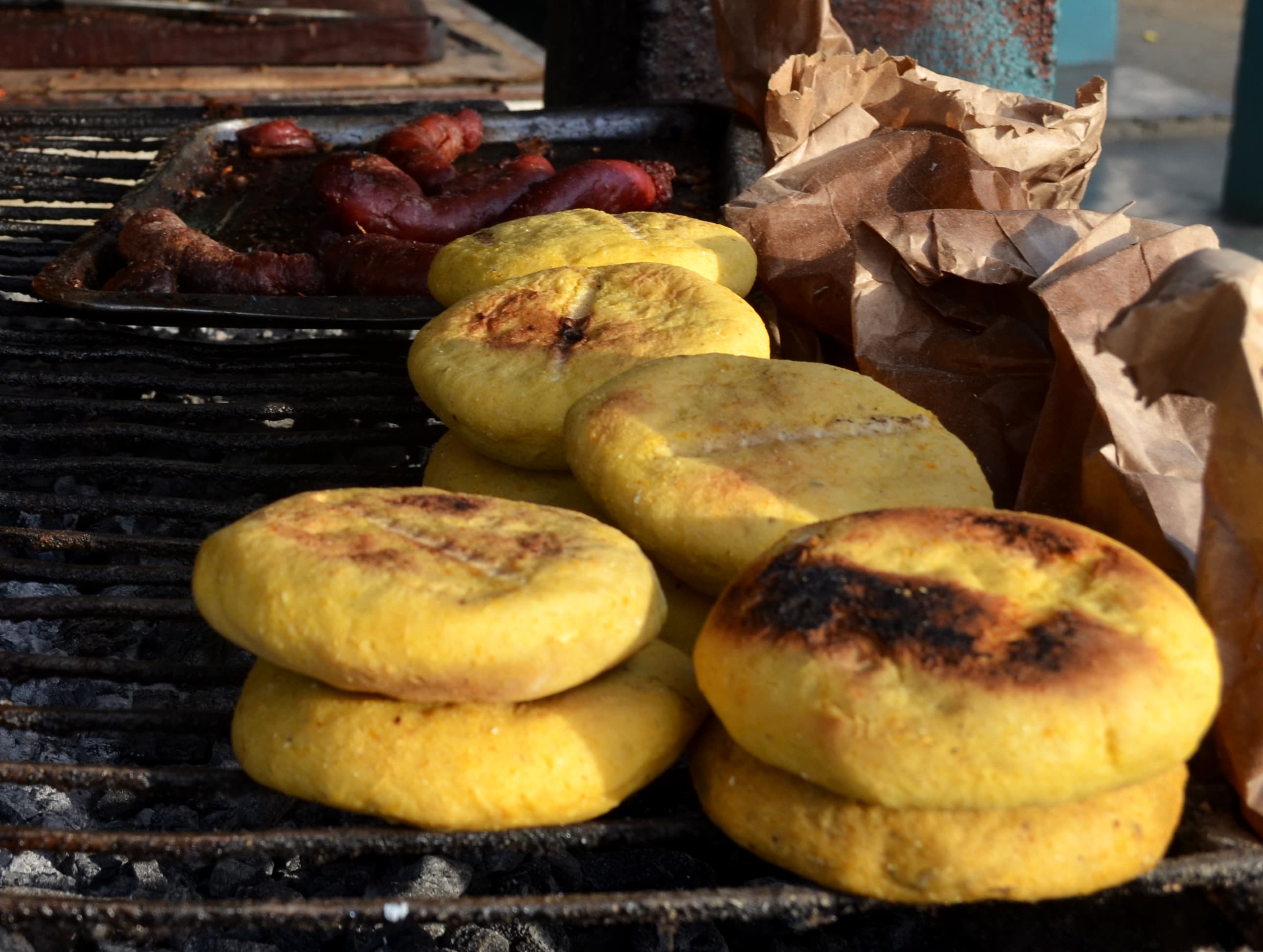
The queen. Two thousand years old and still undefeated.
The arepa predates European contact by at least 2,000 years, evolving from indigenous corn cakes cooked on clay budares. In 1954, Harina P.A.N. pre-cooked corn flour democratized production, turning a labor-intensive tradition into an everyday staple that defines Venezuelan identity.
Read the story staple
A sweet corn pancake folded around melting cheese. The most underrated food in Latin America.
The cachapa has indigenous origins, born from the abundance of fresh sweet corn (jojoto) in Venezuela's central valleys. Communities ground fresh kernels into batter and cooked it on flat stones — a tradition that roadside vendors and restaurants have preserved virtually unchanged for centuries.
Read the story beverage
Thick, sweet, ice-cold, and served from a cart. Venezuela's milkshake that isn't a milkshake.
Venezuelan chicha is not the fermented corn drink of the Andes. It's a thick, sweet, milky rice beverage — cooked rice blended with milk, condensed milk, vanilla, and cinnamon, served ice-cold from street carts. The tradition of chicheros (chicha vendors) dates back decades, embedded in the fabric of Venezuelan street culture.
Read the story staple
Cornmeal, not wheat. Deep-fried, not baked. Naturally gluten-free. Completely addictive.
While empanadas exist across Latin America, Venezuela's version is distinct: made with corn flour (not wheat), shaped into half-moons, and deep-fried until the exterior shatters. The tradition fuses indigenous corn culture with Spanish pastry technique, creating something that belongs entirely to Venezuela.
Read the story seasonal
Christmas wrapped in banana leaves. The most labor-intensive food Venezuelans make — and they make it every single year.
The hallaca emerged during the colonial era as an act of culinary synthesis — enslaved and indigenous cooks wrapping whatever scraps the Spanish colonial kitchen discarded into corn dough and banana leaves. Over four centuries, it evolved into a baroque masterpiece of stewed meat, olives, capers, and raisins, made communally every December.
Read the story regional
Zulia's ring-shaped breakfast — corn, plantain, and panela twisted into something that never should have stayed regional.
The mandoca is Zulia's most beloved breakfast food — a ring of fried dough made from corn flour, ripe plantain, and papelón (raw cane sugar). Its origins are colonial-era Maracaibo, where the combination of abundant plantains and sugarcane created a sweet-savory breakfast tradition that Zulianos guard as fiercely as their identity.
Read the story dish
dishThe Creole Flag. Four components, four cultures, one nation on a plate.
The pabellón criollo crystallized as Venezuela's national dish in the 19th century, though its components are much older. Its four elements — shredded beef, black beans, white rice, and fried sweet plantain — are said to represent the four cultural streams that built Venezuelan identity: European, African, indigenous, and mestizo.
Read the story snack
snackNo Venezuelan gathering is complete without them. Not one.
Named after the town of Los Teques in Miranda state, the tequeño emerged in the mid-20th century as a party snack and never left. A stick of white cheese wrapped in wheat dough and deep-fried, it became the non-negotiable appetizer at every Venezuelan social event — birthdays, weddings, funerals, revolutions.
Read the story