Angel Falls and Canaima National Park: The Complete Travel Guide
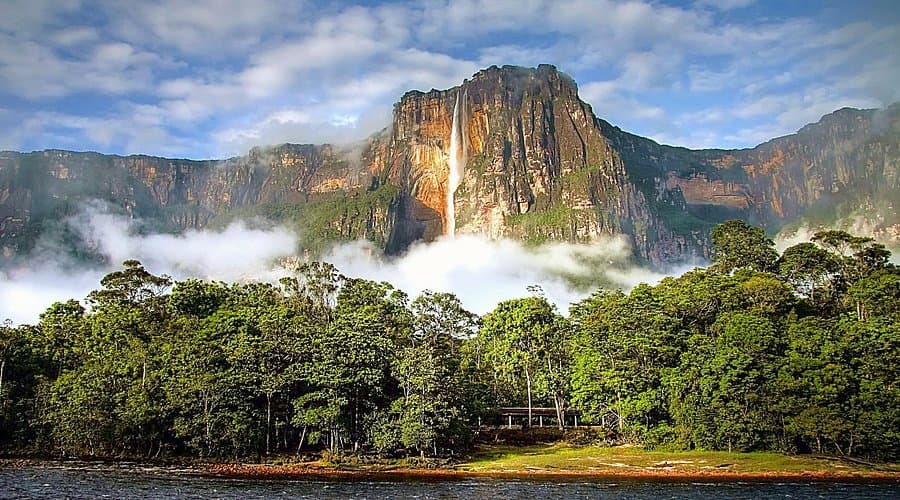
Nine hundred and seventy-nine metres. That is the total height of the water's descent off the edge of Auyan-tepui, a flat-topped sandstone mountain that has been standing in the same spot for roughly two billion years — and within it, a single clear, uninterrupted plunge of roughly 807 metres before the water touches rock again. Angel Falls (Salto Angel) is the tallest waterfall on Earth, and it exists in a landscape so geologically ancient and visually strange that Arthur Conan Doyle used it as the template for The Lost World without ever having visited.
Canaima National Park covers 30,000 square kilometres of southeastern Venezuela — roughly the size of Belgium — and contains the highest concentration of tepuis (table-top mountains) on the planet. These sandstone formations, remnants of a vast plateau that once covered much of South America, are some of the oldest exposed rock on Earth. Their summits, isolated for millions of years, host ecosystems found nowhere else: carnivorous plants, endemic frogs, bacteria-tinted pink quartzite.
The Pemon people have inhabited this landscape for centuries. They navigate the rivers, guide the treks, run the camps, and maintain a relationship with the tepuis that is both practical and spiritual. Auyan-tepui — the mountain from which Angel Falls drops — translates roughly as "Devil's Mountain" in Pemon, not because they fear it, but because the scale of the place commands a name that matches.
This is not a destination you visit casually. There are no roads to Canaima. Access is by air only, and the picture changed in 2026: the single scheduled commercial flight now runs from Caracas (Maiquetia) on CONVIASA, while the older Ciudad Bolivar and Puerto Ordaz routes have been reduced to private charter. Reaching Angel Falls from the Canaima base camp requires a river journey by curiara (motorized dugout canoe) followed by an overland hike. The infrastructure is basic. The logistics require planning. And the payoff — standing at the base of a waterfall that drops nearly a kilometre through mist and silence — is one of the genuinely singular experiences available on this planet.
Our Canaima region coverage is currently limited — this remote area is underrepresented on our platform, and expanding coverage here is a priority. What follows is everything you need to plan the trip regardless.
Quick Facts
| Detail | Info |
|---|---|
| Location | Bolivar state, southeastern Venezuela |
| Park size | 30,000 km² (UNESCO World Heritage Site) |
| Angel Falls height | 979 m (3,212 ft) — world's tallest waterfall |
| Best for waterfall volume | June to November (rainy season) |
| Best for clear skies | December to April (dry season) |
| Getting there | Scheduled CONVIASA flight from Caracas/Maiquetia, Thu & Sun (~1h5m, ~$150 RT); Ciudad Bolivar & Puerto Ordaz charter only |
| Park fee | ~$40 per person (Canaima National Park, cash on arrival) |
| 2026 caveat | Maiquetia disrupted since the June 2026 quakes — verify the flight is running before booking; see safety |
| Typical budget | $100-200+/day (guided tours required) |
| Guided access | All tepui approaches require Pemon guides |
| Climate | 25-35°C at camp level; cooler on tepui summits |
| Time zone | UTC-4 (Venezuela Standard Time) |
Why Visit Canaima
Bucket lists are usually marketing constructs. Angel Falls is one of the few entries that earns its place through sheer physical reality rather than Instagram curation.
The geology is two billion years old. The tepuis of the Gran Sabana are among the oldest geological formations on Earth — Precambrian sandstone that predates complex life. Walking on a tepui summit is walking on rock that formed before anything with a spine existed. The landscape does not look like anywhere else because it is not like anywhere else. It is what remains of a continental-scale plateau that eroded away everywhere except here.
The waterfall exceeds comprehension. Angel Falls is not just tall — it is so tall that in dry season, the water atomizes into mist before reaching the base. During rainy season, the volume transforms the falls into a thundering white column visible from the air. Either version is extraordinary. The scale only registers in person — photographs flatten the depth. When you stand at the Mirador Laime viewpoint and look up, the top of the falls disappears into cloud even on clear days.
The Pemon culture is living, not museum-piece. The Pemon communities in and around Canaima are not performing heritage for tourists. They live here, navigate these rivers, and maintain knowledge of the landscape that no GPS or guidebook can replicate. Your guide's grandmother's grandmother knew these trails. The curiara that takes you up the river was built by the family of the person steering it. This is not cultural tourism in the theme-park sense — it is traveling through an inhabited landscape with the people who inhabit it.
The remoteness is real. Canaima has no road connection to the outside world. The nearest paved road is hours away. When your flight lifts off from Caracas and descends an hour later toward the pink-tinted lagoon and the sound of waterfalls, you are arriving somewhere that requires genuine effort to reach. That effort filters the experience in ways that are increasingly rare.
Top Things to Do in Canaima
1. The Angel Falls River Expedition (2-3 Days)
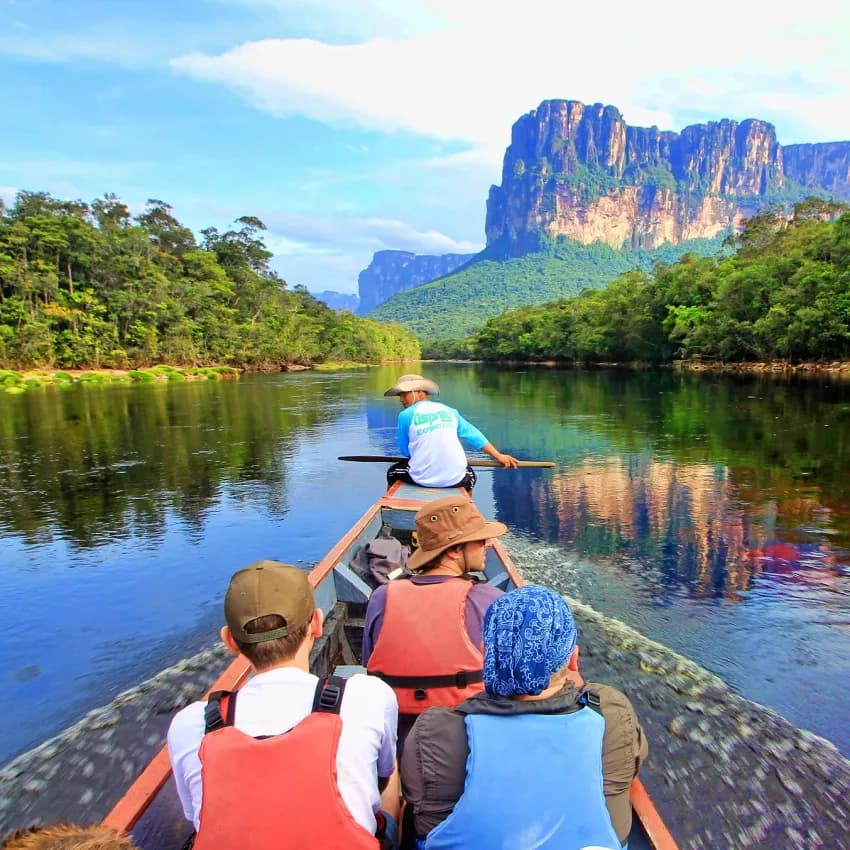
This is the signature experience — the reason most people come to Canaima. The journey from Canaima Lagoon to the base of Angel Falls is a multi-day expedition by motorized curiara (dugout canoe) up the Churun River, followed by an overland hike through jungle to the viewing points.
Day 1: Depart Canaima Lagoon by curiara. The river journey takes 4-5 hours upstream through increasingly narrow channels, passing through rapids that your Pemon pilot navigates with alarming casual precision. Arrive at Isla Raton camp — a basic riverside camp with hammocks or tents. Afternoon rest.
Day 2: Early morning hike (1-1.5 hours) through dense jungle to Mirador Laime, the primary Angel Falls viewpoint. If the sky cooperates, this is the moment: the full 979-metre cascade visible from top to pool. Continue to the base pool (another 30 minutes) where, during rainy season, the mist from the falls creates a permanent rain shower. Swim in the pool at the base of the world's tallest waterfall. Return to camp. Afternoon: optional hike to secondary viewpoints.
Day 3: Return journey downstream (faster — 2-3 hours with the current). Back to Canaima Lagoon by midday.
Key details:
- Tours must be booked through licensed operators, all employing Pemon guides
- Cost: approximately $250-500 per person for the 2-3 day trip depending on group size and season
- Rainy season (June-November) is effectively the only window the rivers run high enough to reach the base of the falls by curiara — this is when the base expedition actually operates, with October-November the sweet spot (rains easing, water still high). In the dry season (December-May) the rivers are usually too low to reach the base, and Canaima visits become flyover-and-lagoon trips rather than base expeditions; base-bound departures in those months are frequently cancelled
- Hammock camping is standard. Bring a sleeping bag liner and expect basic conditions
- Physical fitness: moderate. The hike is not technical but involves muddy trails, river crossings, and tropical heat
2. Swim Behind Sapo Falls (Salto El Sapo)
Canaima Lagoon is fed by several waterfalls, and the most accessible is Salto El Sapo — a wide curtain of water that you can walk behind on a natural rock path. The experience is exactly as dramatic as it sounds: you enter through the spray, follow a ledge behind the curtain, and emerge on the other side soaked and disoriented by the volume of water that just passed within arm's reach.
This is a half-day excursion from the Canaima base camp, typically done by curiara across the lagoon plus a short walk. No special equipment needed beyond shoes that can get wet (you will be thoroughly drenched). The walk behind the falls takes about 20 minutes. Bring a waterproof bag for electronics.
Salto El Sapo works in both seasons: rainy season for maximum drama, dry season for clearer views of the rock behind the water.
3. Explore Canaima Lagoon
The lagoon itself — pink-tinted from tannins in the river water — is surrounded by smaller waterfalls, beaches, and Pemon settlements. A half-day or full-day by curiara around the lagoon covers:
- Salto El Sapo and Salto El Sapito — The two most accessible waterfalls, both walkable
- Playa de Canaima — A pink-sand beach on the lagoon shore, good for swimming between excursions
- Pemon craft stalls — Handmade baskets, carved wooden figures, and traditional jewelry. Buying directly supports the communities that maintain this landscape
- The lagoon overlook — A short hike above the settlement offers a panoramic view of the lagoon, the surrounding waterfalls, and the distant silhouettes of tepuis on the horizon
4. Overflight of the Tepuis
Small-plane overflights from Canaima provide the only way to see Angel Falls and the surrounding tepuis from above without a multi-day trek to a summit. The standard overflight circles Auyan-tepui and passes directly alongside Angel Falls — from the air, you can see the river approach the edge and simply disappear into empty space.
Practical details:
- Flights typically run 45-60 minutes
- Cost: $80-150 per person depending on aircraft and group size
- Best conditions: early morning (before cloud builds around the tepui summits)
- Rainy season produces the most spectacular falls views from the air, but also the most cloud cover — it is a gamble
- Dry season offers clearer skies but a thinner waterfall
- These flights also cover the broader Gran Sabana landscape: the flat savanna, the river systems, and distant tepuis including Roraima
5. Trek to Roraima (6-7 Days)
Mount Roraima is the most famous tepui in the Gran Sabana and one of the most extraordinary treks in South America. The journey from the trailhead at Paratepui to the summit and back takes 6-7 days and crosses open savanna, cloud forest, and finally the alien landscape of the tepui summit — black rock, crystal valleys, carnivorous plants, and endemic species found nowhere else on Earth.
The route:
- Days 1-2: Trek across Gran Sabana grasslands from Paratepui to the base of Roraima. Camp at riverside sites. Relatively flat terrain, hot during the day.
- Day 3: The ascent. A single viable route (La Rampa) climbs the cliff face through cloud forest. Steep, slippery, physically demanding. Takes 4-6 hours.
- Days 4-5: Summit exploration. The top of Roraima is a 31 km² plateau of black quartzite formations, crystal-filled pools, and sinkholes. Overnight in natural rock shelters (no tents — the overhangs provide cover). The summit is frequently cloud-covered, creating an atmosphere that justifies every "lost world" comparison ever made.
- Days 6-7: Descent and return to Paratepui.
Key details:
- Pemon guides are mandatory. No independent trekking is permitted
- Physical fitness: high. The summit ascent is strenuous, and the full trek covers 60+ kilometres with elevation gain
- Cost: $500-800+ per person for the full guided trek including food, camping equipment, and guide fees
- Permits are required and managed through the tour operator
- Best season: dry season (December-April) for clearer skies. Rainy season makes the ascent significantly more challenging and the summit more cloud-covered
- The Roraima trek departs from the Santa Elena de Uairen area (southern Gran Sabana), not from Canaima. It is a separate trip requiring its own logistics
6. Drive the Gran Sabana (La Troncal 10)
The road from Ciudad Bolivar south to Santa Elena de Uairen — La Troncal 10 — crosses the entire Gran Sabana and is one of the most spectacular drives in South America. The landscape shifts from lowland forest to open savanna punctuated by tepuis, waterfalls, and rivers.
Notable stops along the route:
- Salto Kama — A wide waterfall accessible via a short hike from the road. Swimming pool at the base.
- Quebrada de Jaspe (Jasper Creek) — A riverbed made entirely of smooth red jasper stone. Unique in the world. Shallow water flows over polished red rock for several hundred metres.
- Salto Aponwao — A dramatic waterfall requiring a guided hike. Less visited and more rewarding for the effort.
- Indigenous Pemon communities — Several roadside communities welcome visitors and sell handicrafts
Practical: The drive from Ciudad Bolivar to Santa Elena takes 8-12 hours. The road is paved but sections are deteriorated. A high-clearance vehicle is recommended. Fuel stations are infrequent — fill up at every opportunity. This drive can be combined with the Roraima trek (Santa Elena is the staging point) or done as an independent Gran Sabana exploration.
7. Visit Pemon Communities
Several Pemon communities in and around Canaima welcome visitors. These are not staged cultural experiences — they are working communities where you can learn about traditional agriculture, basket weaving, curiara construction, and the Pemon relationship with the tepui landscape.
Your guide (who is likely Pemon themselves) can arrange community visits. Some camps on the Angel Falls river expedition include community stops. Purchasing handicrafts directly is the most direct economic support you can provide.
Respect note: Always ask permission before photographing people. Follow your guide's lead on appropriate behavior in community spaces. The Pemon have welcomed visitors to their territory for decades, but that welcome depends on mutual respect.
8. Swim in the Lagoon and River Pools
The rivers feeding Canaima Lagoon create natural swimming pools throughout the area. The water is tannin-colored (dark amber, like tea) but clean and warm. Several accessible pools are within walking distance of the main camp:
- The lagoon beach — Shallow wading and swimming with views of the waterfalls
- River pools above Sapo Falls — Calm pools in the river before it drops over the falls. Your guide will indicate safe areas (stay well upstream of the fall line)
- Pools along the Churun River — During the Angel Falls expedition, the camps are located at river sites with swimming access
Where to Stay in Canaima
Accommodation in Canaima is limited and basic compared to mainland Venezuelan destinations. The options fall into three categories:
Campamentos (Lodges)
Several lodge-style campamentos operate near the lagoon, offering the most comfortable accommodation available. Rooms are simple but private, with beds (not hammocks), shared or private bathrooms, and meal service. These lodges also function as tour operators, bundling accommodation with Angel Falls expeditions and lagoon excursions.
From our listings:
- Campamento Canaima — One of the established camp operations with river access
- Canaima Posada Morichal — Lodge-style accommodation near the lagoon
Posadas
A handful of smaller posadas in the settlement offer budget accommodation. Rooms are basic — expect beds, fans (electricity is generator-powered and not 24-hour), and shared facilities. Meals are usually included or available on-site.
- Posada Canaima Suites — A more comfortable option within the settlement
Hammock Camps (On Expedition)
During the Angel Falls river expedition, overnight stays are at riverside camps with hammock shelters. These are not lodges — they are thatched-roof structures with hammock hooks, a cooking area, and basic facilities. Sleeping bags or liners are recommended. This is camping in the jungle, and it is part of the experience.
Important note: Our Canaima region coverage is currently limited. This area is underrepresented on our platform, and we are actively working to expand coverage. The listings we do have are verified, but your options will be more limited than in destinations like Merida or Los Roques. For now, booking through a tour operator who bundles accommodation with transport and guides is the most reliable approach.
Pricing: Expect $80-150/night for campamento lodges (meals included), $40-80/night for basic posadas (meals often included). Multi-day packages that bundle everything (flight, accommodation, Angel Falls expedition) run $500-1,200 per person depending on duration and group size.
Where to Eat in Canaima
Canaima is not a food destination. It is a place where you eat well enough to sustain yourself while the landscape does the heavy lifting. That said, the food is honest, fresh, and shaped by the environment.
What to Expect
Campamento meals: Most lodges serve three meals a day, family-style. Breakfast is typically arepas, eggs, fruit, and coffee. Lunch and dinner feature freshly caught fish (primarily cachama and coporo from the river), rice, beans, plantains, salad, and whatever produce has arrived on the last supply flight. The fish is excellent — pulled from the river that morning.
Expedition meals: On the Angel Falls river trip, your Pemon guides cook at the camp. Meals are simpler: grilled fish, rice, canned supplies, and fresh fruit. Coffee brewed over a fire in the morning. The food is fuel, and it is adequate, but do not expect culinary variety.
Pemon cuisine: When available, traditional Pemon food is worth trying. Casabe (cassava bread) is a staple — flat, crisp, slightly nutty, eaten with everything. Tuma (a peppery sauce made from chili, salt, and ant extract) is a condiment unique to the region. Fish wrapped in leaves and cooked over coals (pescado enrollado) is preparation passed down through generations.
Practical tip: Bring snacks. Trail mix, energy bars, dried fruit. Not because you will be hungry (the camps feed you well enough), but because meal timing on expedition is dictated by river and weather conditions, not your appetite.
Getting to Canaima
By Air (Required)
There is no road to Canaima. Access is exclusively by air, and the picture changed in 2026 — the routes most older guides describe no longer run as scheduled service.
The scheduled route — Caracas (Maiquetia) via CONVIASA: The only scheduled commercial flight to Canaima now departs from Caracas on the state carrier CONVIASA, twice weekly (Thursday and Sunday), on an Embraer 190. Flight time is roughly 1 hour 5 minutes and a round trip runs about $150 per person. Seats are limited and the two-days-a-week schedule fills up — book well ahead and plan your trip around the Thursday/Sunday windows.
2026 live-status caveat: This route departs from Caracas's Maiquetia airport, which has been disrupted since the June 2026 earthquakes, so even the CONVIASA flight is not guaranteed to be running on its normal schedule. Confirm the flight is actually operating before you book anything non-refundable, and check our safety page for the current airport and travel-status picture. Do not assume a fixed departure date this far out.
Ciudad Bolivar and Puerto Ordaz — charter only: The scheduled commercial flights that used to run from Ciudad Bolivar and Puerto Ordaz (Ciudad Guayana) are suspended. From these cities, Canaima is now reachable only by private charter — small Cessna-type aircraft (5-12 passengers) that most travelers arrange through a Canaima operator or campamento. Charter is more flexible on timing but considerably more expensive than the CONVIASA seat, and prices vary widely by aircraft and group size.
Park fee: Budget roughly $40 per person for the Canaima National Park entry fee, usually collected on arrival and often not bundled into flight or tour prices. Bring it in cash.
Important logistics:
- Flights are weather-dependent. Cloud cover around the tepuis can delay or cancel flights. Build buffer days into your schedule
- Weight limits on small charter aircraft are strict. Pack light (10-15 kg recommended)
- Lodge and expedition seats inside Canaima are limited — the settlement is tiny — so book accommodation and your Angel Falls trip together with the flight, not on arrival
- Book through your tour operator or campamento — they coordinate the flight, the park fee, and the reliable carriers
Reaching Ciudad Bolivar
Ciudad Bolivar remains the historic overland gateway even though its scheduled Canaima flights no longer run — charter departures still leave from here, and it sits on the Orinoco River about 600 km southeast of Caracas.
- By air: Commercial flights from Caracas (approximately 1 hour)
- By bus: Overnight bus from Caracas (8-10 hours). Several companies operate the route
- By car: Paved highway from Caracas via Puerto Ordaz. 8-10 hour drive
Ciudad Bolivar itself is worth a half-day: a colonial center on the Orinoco with pastel buildings, a Bolivar museum, and a riverfront promenade. Several comfortable hotels and posadas make it a natural overnight stop if you are reaching Canaima by charter.
Safety and Practical Tips
Canaima presents a different safety profile than urban Venezuela. The risks are environmental, not criminal.
Environmental safety:
- The jungle is real jungle. Stay on marked trails. Follow your guide at all times
- River travel in curiaras involves rapids. Your Pemon pilot has navigated these rivers for years — trust their decisions. Wear your life jacket when provided
- Insect protection is essential. Mosquitoes and jejenes (sand flies) are constant companions, especially at dawn and dusk. Bring strong repellent (DEET-based recommended), long sleeves, and long pants for evenings
- The sun is equatorial-strength. Sunscreen, hat, and sunglasses at all times
- Hydrate constantly. The combination of heat, humidity, and physical activity depletes fluids fast
Health:
- There is a very basic medical post in Canaima. Serious medical issues require air evacuation to Ciudad Bolivar or Caracas. Travel insurance with evacuation coverage is strongly recommended
- Bring a complete personal medical kit: antimalarials (consult your doctor — Canaima is in a malaria zone), antihistamines, anti-diarrhea medication, bandages, antiseptic, any personal medications
- Tap water in Canaima should be treated. Bring purification tablets or drink bottled/boiled water
- The river water on expedition is generally safe when boiled (your guides will prepare drinking water), but bring backup purification
Connectivity:
- Cell phone service in Canaima is virtually nonexistent. Satellite phones are the only reliable communication on expedition
- WiFi does not exist outside of the rare generator-powered campamento
- Inform someone of your itinerary before departing. Once you are on the river heading to Angel Falls, you are off the grid entirely
Money:
- Bring all cash you will need. There are no ATMs, banks, or card terminals in Canaima
- USD is preferred. Small bills essential
- Budget for tips for your Pemon guides — this is their livelihood and they earn every bolivar
What to pack for the Angel Falls expedition:
- Waterproof bag (dry bag) for electronics and clothing
- Headlamp (camps have no lighting)
- Quick-dry clothing (you will get wet multiple times daily)
- Sturdy hiking shoes with ankle support and good traction on wet surfaces
- Rain jacket (waterproof, not water-resistant)
- Sleeping bag liner for hammock camps
- Insect repellent (high DEET concentration)
- Sunscreen, hat, sunglasses
- Personal first aid kit
- Water bottle with purification capability
- Snacks and energy food
- Cash in small bills for tips and purchases
For comprehensive safety information and current travel advisories, visit our safety page.
Sample 5-Day Canaima Itinerary
Two ways in (2026): the scheduled CONVIASA flight runs Caracas–Canaima on Thursdays and Sundays, so travelers on that route fly direct from Caracas and skip the Ciudad Bolivar stop; the day-by-day below shows the Ciudad Bolivar charter variant, which adds a night in the colonial river city. Either way, confirm the flight is actually operating before locking in dates — see the Getting to Canaima section above and our safety page for the current airport picture.
Day 1: Ciudad Bolivar
Arrive in Ciudad Bolivar by air or bus from Caracas. Explore the colonial center — the Paseo Orinoco waterfront, the cathedral, the Museo de Ciudad Bolivar. Overnight at a hotel in the city. Confirm tomorrow's charter flight to Canaima with your operator. Pack light for the next four days. (Travelers on the scheduled CONVIASA service instead fly direct from Caracas on a Thursday or Sunday and skip this night.)
Day 2: Fly to Canaima + Lagoon
Morning flight to Canaima (1 hour). The aerial approach — savanna, rivers, tepuis emerging from cloud — is the first indication that you have arrived somewhere fundamentally different. Check into your campamento. Afternoon: curiara excursion around Canaima Lagoon. Visit Salto El Sapo — walk behind the waterfall, emerge drenched and grinning. Evening at the lagoon. First campamento dinner.
Day 3: Angel Falls Expedition Day 1
Early departure by curiara up the Churun River. Five hours of river navigation through progressively narrower channels, past jungle walls and over rapids. Your Pemon guides point out birds, monkeys, river features. Arrive at Isla Raton camp by early afternoon. Set up hammocks. Swim in the river. Sunset over the jungle canopy. Dinner at camp — grilled fish, rice, stories from the guides.
Day 4: Angel Falls + Return
Pre-dawn wake-up. Hike through jungle (1-1.5 hours) to Mirador Laime viewpoint. If the cloud cooperates: the full 979-metre cascade revealed through the trees. Continue to the base pool. Stand in the mist of the world's tallest waterfall. Swim if conditions allow. Return to camp, break down, load the curiaras. Downstream journey back to Canaima (2-3 hours, faster with the current). Late afternoon arrival. Rest. Final campamento dinner.
Day 5: Overflight + Departure
Early morning overflight of Auyan-tepui and Angel Falls (weather permitting). See from the air what you experienced from the ground — the river approaching the cliff edge and vanishing into a kilometre of empty space. Return to camp, pack. Afternoon flight out — the scheduled CONVIASA service returns to Caracas, while charter travelers fly back to Ciudad Bolivar to connect onward or overnight.
Extend to 7 days: Add the Gran Sabana drive from Ciudad Bolivar to Santa Elena de Uairen (Day 5-6), visiting Quebrada de Jaspe, Salto Kama, and the savanna waterfalls. Or add a Roraima trek (requires 6-7 additional days from Santa Elena).
Build your own version: Our AI trip planner can design a custom Canaima expedition based on your timeline, fitness level, and interests — including available operators and current conditions.
Frequently Asked Questions
When is the best time to visit Angel Falls?
It depends on what you prioritize. Rainy season (June-November) produces the most spectacular waterfall — full volume, thundering into the base pool, mist visible from kilometers away. The river is navigable with certainty. The tradeoff: more cloud cover around the tepui summit, meaning the falls may be partially hidden. Rain is frequent. Dry season (December-May) offers clearer skies and better photography conditions, but the waterfall can thin to a spray that atomizes before reaching the bottom — and, more to the point, the rivers are usually too low to reach the base by curiara. December-May Canaima trips are typically flyover-and-lagoon visits rather than base expeditions, and base-bound departures in those months are frequently cancelled. The sweet spot: October-November (rains easing, water still high, clouds thinning) delivers the best combination of a reachable, full-volume falls and workable visibility.
How physically demanding is the Angel Falls trip?
Moderate. The river journey requires sitting in a curiara for several hours (uncomfortable but not strenuous). The hike to the viewpoint and base pool is approximately 2-3 hours round trip on muddy, root-covered jungle trails with elevation changes. You do not need to be an athlete, but you should be comfortable walking on uneven terrain in tropical heat for extended periods. The Roraima trek, by contrast, requires genuine fitness — it is a multi-day high-altitude trek with a strenuous summit ascent.
Can I visit Angel Falls in a day trip?
The overflight (45-60 minutes by small plane) gives you an aerial view of Angel Falls without the river expedition. You will not reach the base of the falls or the viewpoint, but you will see the full cascade from the air. It is flown from Canaima itself, so it fits a shorter Canaima visit without the multi-day river expedition — though the twice-weekly CONVIASA schedule (Thursday/Sunday) makes a true single-day round trip from Caracas impractical; plan on at least one overnight. The full ground experience (river + hike + viewpoint + base pool) requires a minimum of 2 nights.
Is Canaima safe?
The safety considerations in Canaima are environmental, not criminal. The area is remote, the terrain is challenging, and medical facilities are minimal. Travel with a licensed operator, follow your Pemon guides, bring appropriate gear and medications, and ensure you have travel insurance with evacuation coverage. The Pemon communities are welcoming and the tourist infrastructure, while basic, has been operating safely for decades.
How much does a Canaima trip cost?
A typical 3-night trip (round-trip flight, campamento accommodation, Angel Falls river expedition) costs roughly $850-1,600 per person depending on the operator, season, and group size — the spread is driven mostly by how you fly and how large your group is, not by lodge quality. The scheduled CONVIASA seat from Caracas is about $150 round trip; a private charter from Ciudad Bolivar or Puerto Ordaz costs considerably more. Budget another ~$40 for the park entry fee and $80-150 for an overflight. The Roraima trek is a separate expedition costing $500-800+ for 6-7 days. Canaima is not budget travel, but the experience-per-dollar ratio is extraordinary.
Do I need to book through a tour operator?
Yes. Independent travel in Canaima is not practically possible. The national park requires guided access, river navigation requires Pemon pilots, and the logistics (flights, camps, food, permits) require coordination. Book through an established operator who works with Pemon guides. Your campamento can usually arrange everything as a package.
Why is your Canaima coverage so limited?
Canaima's remoteness and small operator community mean fewer businesses have been catalogued on our platform so far. We are actively expanding coverage in this region. The listings we do have are verified and reliable. For the most current options, browse Canaima listings and check back as we add new operators and accommodations. If you run a tourism operation in Canaima and want to be listed, reach out through our platform.
---
This is a trip that requires planning but rewards it completely. Use our AI-powered trip planner to build a custom Canaima expedition — dates, logistics, available operators, and a day-by-day plan built around your timeline.
Browse Canaima and Bolivar state listings on Vamos A Venezuela.
Written by VAV Editorial
Last updated: August 12, 2026