


Venezuelan Food Guide: 25 Dishes Every Traveler Should Try
Venezuelan food does not get the international recognition it deserves. Not because it is not extraordinary — it is — but because the country has been functionally off the tourist map for a decade, and cuisines need travelers to carry them across borders. Thai food went global because backpackers ate pad thai in Bangkok and went home craving it. Peruvian ceviche needed a generation of Lima-obsessed chefs to break through. Venezuelan food has been waiting for its moment, and that moment is now.
What you will find here is a cuisine built on corn — a civilization's worth of techniques for grinding, shaping, grilling, frying, and stuffing it. Layer onto that the African influence from three centuries of Caribbean history: the slow braises, the plantain in every form, the coconut sauces along the coast. Add Spanish colonial roots — the stews, the empanadas, the Christmas traditions — and then the regional wildness of a country that stretches from Andean highlands to Caribbean islands to Amazonian jungle. The result is food that is simultaneously familiar and unlike anything you have eaten.
This guide covers 25 dishes, organized by how you will encounter them: the five staples you will eat every day, the street food you will smell on every corner, the regional specialties worth traveling for, and the drinks and sweets that round out one of the most underrated food cultures in the Americas. Every entry is meant to make you want to book a flight. If it does not, we have failed.
Browse hundreds of curated listings on Vamos A Venezuela, including restaurants, food markets, and dining experiences across the country.
---
The Big Five: Venezuelan Staples
These are the dishes that define the cuisine. You will encounter every one of them within your first 48 hours in the country, and you will still be eating them with enthusiasm on day thirty.
1. Arepa
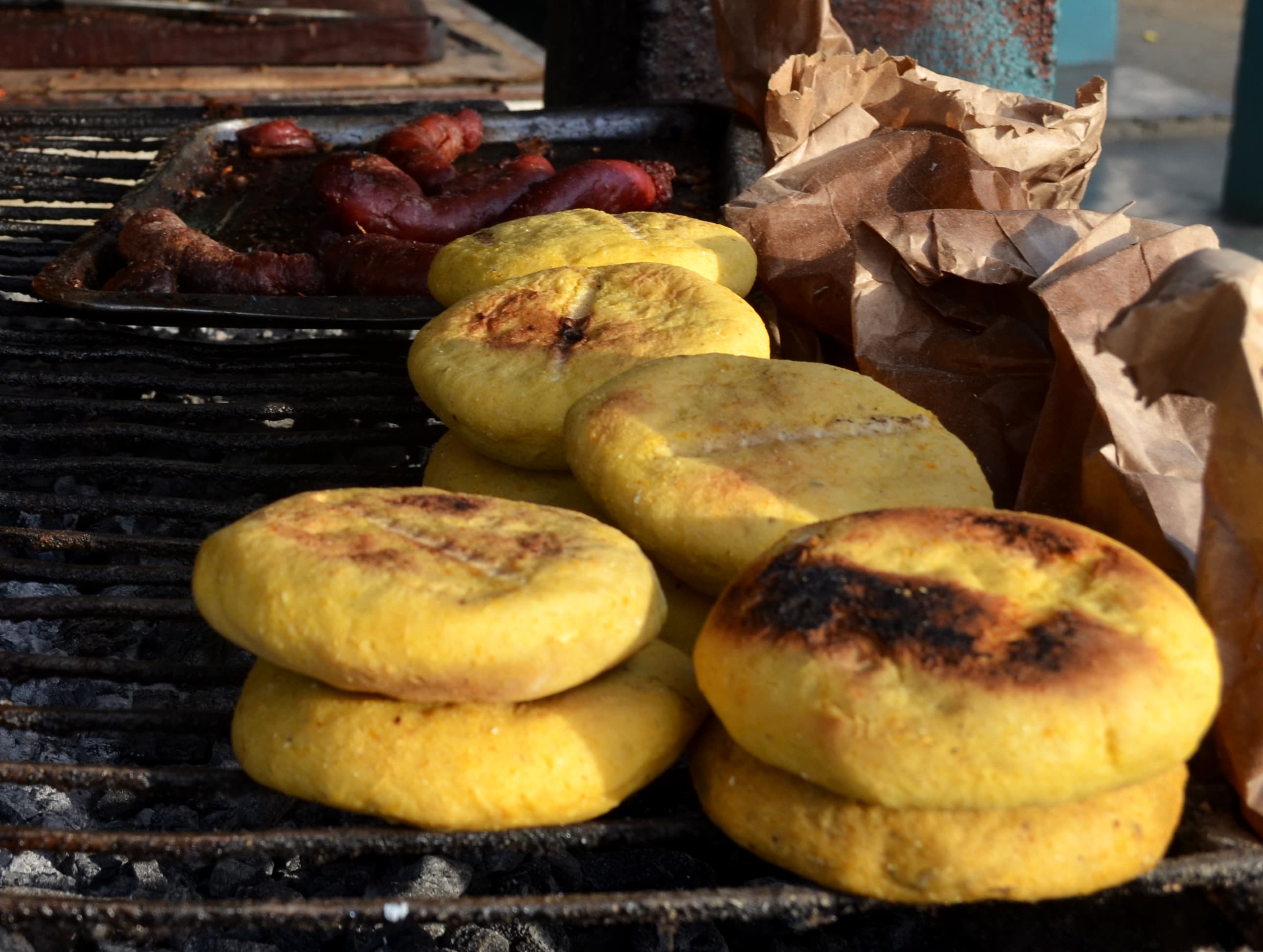
The arepa is not a side dish, not a bread substitute, not a snack. It is the foundation. Venezuelans eat arepas for breakfast, lunch, dinner, and at 2am standing outside an arepera after a night out. It is ground corn dough — precooked corn flour (Harina P.A.N. is the canonical brand, and Venezuelans abroad will pay absurd shipping costs to get it) — shaped into a thick disc, cooked on a flat griddle (budare) until the exterior develops a golden-brown crust, then split open and stuffed.
The exterior should crack slightly when you press it. The interior should be soft, almost creamy, with a faint sweetness that comes from the corn itself. A great arepa has structural integrity — it holds its filling without collapsing — but yields when you bite through it. The crust-to-interior ratio matters, and every Venezuelan has an opinion about how thick is correct. (The answer varies, but anyone who makes them paper-thin is doing it wrong.)
The fillings are where it gets serious. In Caracas alone, a good arepera will offer twenty or more. The essential ones:
Reina Pepiada — Shredded chicken mixed with avocado and mayonnaise, sometimes with a squeeze of lime. Named after Susana Dujm, who won Miss World in 1955 — "reina pepiada" was Caracas slang for an attractive, curvy woman. The avocado should be ripe enough to be creamy but still have structure. This is the filling that converts skeptics.
Domino — Caraotas negras (black beans) and queso blanco (white cheese). The name comes from the visual: black and white, like a domino tile. Deceptively simple. The beans should be thick, nearly a paste, cooked with cumin and garlic until they are deeply savory. The cheese is fresh, salty, crumbly. This is the filling that Venezuelan grandmothers eat for breakfast, and they are right to.
Pelua — Shredded beef (carne mechada) with yellow cheese, melted. The cheese gets stringy and pulls when you bite. The beef is braised until it falls apart, seasoned with onion, peppers, cumin, and Worcestershire sauce (salsa inglesa, which is somehow a staple of Venezuelan cooking). Rich, messy, unapologetic.
Catira — Shredded chicken with yellow cheese. The blonde counterpart to the pelua. Lighter, but the melted cheese gives it heft. Named "catira" (blonde) for the color of the cheese.
Pabellon — The entire national dish, deconstructed and stuffed into a corn pocket: shredded beef, black beans, cheese, and fried plantain. Excessive in the best way.
Where to eat them: Every city and town in Venezuela has areperas. In Caracas, the late-night areperas near Plaza Altamira and Las Mercedes are institutions — you eat standing at a counter at midnight and the arepa tastes better for it. In Merida, the student-district areperas around the university offer massive portions at student prices. On the coast, areperas near fishing docks often add seafood fillings — cazon (baby shark), pulpo (octopus), mariscos (mixed seafood). Every Venezuelan will tell you their local arepera is the best in the country. They are all correct.
A note on Colombian arepas: Colombians also eat arepas. They are different. Colombian arepas are thinner, often grilled plain and served as a side, sometimes topped with butter and cheese but rarely stuffed the way Venezuelan arepas are. This is not a criticism of Colombian arepas. But if someone tells you they have "tried arepas" and they are referring to the Colombian version, they have not experienced what Venezuelans mean by the word. The Venezuelan arepa is a meal in itself — a vehicle for an entire cuisine.
2. Pabellon Criollo
If the arepa is the daily bread, the pabellon criollo is the ceremonial plate. This is the national dish, full stop, and it appears on every restaurant menu in the country — from hole-in-the-wall comedores to Caracas fine dining, where chefs deconstruct it with varying degrees of success but rarely improve on the original.
Four components, arranged on a single plate: carne mechada (shredded beef braised in tomato, onion, garlic, cumin, and peppers until it almost dissolves), caraotas negras (black beans slow-cooked until the broth is thick and dark, seasoned with cumin, garlic, sugar, and usually a splash of something vinegary), arroz blanco (white rice, cooked dry and loose — Venezuelans judge a cook by their rice), and tajadas (ripe plantain, sliced on the diagonal, fried until the edges caramelize to a deep amber).
The genius of pabellon is in the interplay. The beef is smoky and savory. The beans are earthy and deep, with a sweetness that comes from hours of slow cooking. The rice is neutral, a canvas. And the tajadas are where the dish pivots — their caramelized sweetness cuts through the savory components and ties everything together. You eat a forkful that gets a little of each, and the combination is more than the sum.
Order it a caballo and they add a fried egg on top. The runny yolk breaks over the rice and beef, creating a sauce that needs no sauce. This is the correct way.
The plate traces its origins to colonial kitchens where enslaved cooks combined the ingredients available to them — leftover meats, beans, rice, plantain — into something that transcended its humble beginnings. Today it is democratic: the president eats it, the taxi driver eats it, and neither version is fundamentally different.
3. Hallaca
The hallaca is Christmas. Not Christmas-adjacent, not holiday-themed, not seasonal. It IS Christmas in Venezuela, the way turkey is Thanksgiving in the United States — except the hallaca demands actual skill and collective labor to produce, which makes it better.
The process begins weeks before December. Families gather — hallaca-making is communal, an assembly line of generations — and spend an entire day producing dozens, sometimes hundreds. The corn dough (masa) is colored and flavored with onoto (annatto) oil, giving it a deep golden hue. The stew filling (guiso) varies by family but typically includes beef, pork, and chicken braised with olives, capers, raisins, roasted peppers, onions, and a battery of spices. Each hallaca is assembled by hand: a banana leaf is laid out, a thin layer of dough is spread across it, a generous spoonful of guiso goes in the center along with slices of olive and pepper, the leaf is folded into a rectangular packet, tied with string, and boiled.
The result is a dense, complex parcel that steams open with an aroma of banana leaf, corn, and slow-cooked meat. The dough is yielding and rich from the onoto oil. The filling is sweet-savory — the raisins and capers fight for attention in the best possible way. No two families make them the same way, and every Venezuelan will tell you — with absolute conviction — that their mother's hallaca is the best in the country.
Hallacas are traditionally eaten on December 24 (Nochebuena), but restaurants increasingly serve them year-round. If you are in Venezuela during December, you will be offered hallacas everywhere — by friends, by strangers, by your hotel staff. Accept every one. Compare them. This is the national sport.
4. Cachapa
A cachapa is a sweet corn pancake, and that description does not come close to capturing what it actually is. Fresh corn — not dried corn, not corn flour, but tender, milky fresh corn — is ground into a thick batter and cooked on a flat griddle until the edges crisp and the center stays soft and almost custardy. The corn's natural sugar caramelizes on the hot surface, producing a sweet, toasty, slightly charred flavor that is completely different from anything made with processed cornmeal.
The canonical pairing is queso de mano — a fresh, soft, hand-pulled cheese (the name literally means "hand cheese") that is warm, stretchy, and barely salty. The cachapa comes off the griddle, the cheese goes inside, the pancake is folded in half, and the heat begins to melt the cheese into the corn. The combination — sweet corn, salty cheese, the slight chew of the pancake against the yielding cheese — is one of the great pairings in Latin American food. People who have never been to Venezuela eat a cachapa and understand immediately why Venezuelans talk about food the way they do.
Cachapas are best during the rainy months (roughly May through November), when fresh corn is at its peak. Roadside cachaperas — small stands dedicated entirely to cachapas — dot the highways and mountain roads, especially in the central states. The ones along the road to Choroni through Henri Pittier National Park are legendary: you pull over, order a cachapa con queso de mano, and eat it standing next to your car while cloud forest mist drifts through the parking area. It is one of the great culinary experiences in the country.
5. Tequeños
Tequeños are fried cheese sticks, and describing them that way is technically accurate and emotionally wrong. A tequeño is a stick of queso blanco (or sometimes gouda) wrapped in a thin strip of wheat flour dough and deep-fried until the exterior is golden, crispy, and blistered, and the cheese inside has melted into a molten, stretchy, pull-apart state. You bite one end and the cheese stretches. You burn the roof of your mouth because you did not wait long enough. You eat another one immediately.
They are the party food. Every Venezuelan birthday, every holiday gathering, every corporate event, every social occasion of any kind features a tray of tequeños. They are the first thing to disappear and the item whose absence is most noted. A Venezuelan party without tequeños is not a party — it is a meeting.
They are served with guasacaca — an avocado-based sauce (not guacamole, though the ingredients overlap) that is thinner, tangier, and frequently made with vinegar, cilantro, and green pepper. The cool, creamy, acidic guasacaca against the hot, crispy, salty tequeño is a pairing that has launched a thousand Venezuelan food businesses in Miami, Madrid, and wherever else the diaspora has landed.
Make no mistake: tequeños look simple. They are not. The dough thickness matters — too thick and you get bread, too thin and it tears. The cheese must be at the right temperature and moisture level. The frying oil must be hot enough to crisp the dough before the cheese melts out. Every Venezuelan who has made them has a batch that failed, and the successful batches are guarded knowledge.
---
Street Food & Snacks
Venezuelan street food is where the cuisine operates at its most immediate. These are the flavors you encounter walking through a market, standing at a counter, or sitting on a plastic chair on a sidewalk. None of them require a reservation.
6. Empanadas
Venezuelan empanadas are made with corn flour dough (not wheat), shaped into half-moons, and deep-fried until the shell is golden and shatters when you bite it. The corn gives them a sweetness and crunch that wheat empanadas do not have. They are sold from street carts, market stalls, and bakeries across the entire country, and they are the default grab-and-go breakfast for millions of Venezuelans.
The fillings vary by region. Carne mechada (shredded beef) is universal. Queso (cheese) is the purist's choice — just molten white cheese inside a corn shell. Cazon (baby shark) is the signature of Margarita Island — the shark is shredded and cooked with sofrito until it is savory and flaky, and the empanada de cazon is worth the ferry ride alone. Pabellon fills them with the national dish components. Caraota (black bean) is the budget option and possibly the most satisfying.
A fried empanada from a market stall costs $0.50-1.50 depending on filling and location. They are eaten with a squeeze of lime and a splash of hot sauce, standing up, ideally before 9am.
7. Pepitos
The Venezuelan pepito is a hot dog the way a jazz improvisation is a melody — it starts with a recognizable structure and then goes absolutely everywhere. A long bread roll is split, filled with grilled beef or sausage, and then buried under an avalanche of toppings: shredded cabbage, shredded carrots, crushed potato chips (yes, chips inside the sandwich), ketchup, mustard, mayonnaise, garlic sauce, hot sauce, and sometimes cheese, avocado, or a fried egg. It is architectural. It is precarious. It requires two hands and total commitment.
Pepito stands appear on street corners across Venezuela after dark. They are the late-night food, the post-party fuel, the thing you eat at 1am that somehow makes sense in the moment and even better in the memory. The best pepiteros have reputations and regulars. The sauces are proprietary. The experience is non-replicable in any other context.
8. Pastelitos
Pastelitos are fried pastry pockets made with wheat flour dough, folded into rectangles or half-moons, and filled with either savory or sweet ingredients. The savory versions — cheese, beef, chicken — appear at bakeries alongside morning coffee. The sweet versions — guava paste with cheese (bocadillo con queso) being the canonical combination — are afternoon snacks. The dough is flaky, lighter than empanada dough, and the guava-cheese version achieves a sweet-salty contrast that is dangerously addictive. Bakeries sell them warm from the fryer for less than a dollar.
9. Mandoca
Mandoca belongs to Maracaibo and the Zulia region. It is a ring of fried dough made with corn flour, ripe plantain, papelón (unrefined cane sugar), and anise seed. The plantain gives it sweetness and moisture. The papelón deepens the sweetness into something darker, almost molasses-like. The anise adds a floral, herbal note that lifts the whole thing. Mandocas are breakfast food in Zulia — eaten with butter and fresh white cheese, dipped in coffee.
If you are in western Venezuela, mandocas will appear at breakfast unprompted. Eat them immediately. They do not improve with waiting.
10. Golfeados
Golfeados are sweet rolls made with wheat flour dough enriched with papelón (unrefined cane sugar), shaped into spirals, baked until sticky and caramelized, and topped with a slice of salty white cheese while still hot. The cheese melts slightly into the papelón glaze, and the resulting combination — sticky, sweet, salty, warm, yeasty — is one of the most compelling baked goods in the Caribbean. They are a Caracas bakery staple, best eaten mid-morning with a strong coffee. A great golfeado has a pull-apart quality, with layers of dough separated by veins of dark papelón syrup.
11. Chicha
Not to be confused with Andean chicha (which is fermented), Venezuelan chicha is a thick, sweet, cold drink made from cooked rice, milk, sugar, vanilla, and sometimes condensed milk. It is blended until smooth, served over ice, and topped with a dash of cinnamon. The texture is between a smoothie and a milkshake — substantial enough to be a snack, sweet enough to be a dessert, cold enough to be salvation on a 35-degree afternoon. Street vendors sell it from wheeled carts, and every food court and market has a chicha stand. It costs less than a dollar and delivers immediate, unambiguous satisfaction.
12. Patacones and Tostones
Green plantains — starchy, not sweet — are sliced, fried once, smashed flat with a press or the bottom of a glass, and fried again until crispy. The result is a salty, crunchy disc that serves as a side dish, a plate, a snack, or — in Maracaibo — the bread of a sandwich (the patacon maracucho replaces the bun with two large patacones and fills the space between them with beef, cheese, cabbage, and sauces).
The terminology varies by region: "patacon" and "toston" are used interchangeably in some areas and refer to different preparations in others. The constant is the double-frying, which creates an exterior that crunches and an interior that is dense, starchy, and satisfying in the way that only fried plantain can be.
13. Cachitos
The cachito is Venezuela's answer to the croissant — a crescent-shaped roll made from enriched wheat dough, filled with smoked ham (or sometimes ham and cheese), and baked until the exterior is golden and slightly glossy. Venezuelans eat cachitos for breakfast, bought warm from bakeries (panaderias) alongside a cafe con leche. They are soft, buttery, faintly sweet from the dough, and the smoked ham filling gives them a savory anchor. A fresh cachito from a bakery that knows what it is doing — the dough pillowy, the ham warm, the whole thing just out of the oven — is one of the great simple pleasures of Venezuelan mornings.
---
Seafood
Venezuela has roughly 2,800 kilometres of coastline, plus islands. The seafood is fresh, abundant, and prepared with a directness that lets the quality of the fish speak.
14. Pescado Frito (Fried Whole Fish)
The default coastal meal: a whole fish — pargo (red snapper), mero (grouper), or whatever came off the boat that morning — scored, seasoned, and deep-fried until the skin is shatteringly crispy and the flesh inside is moist, white, and flaking. Served with tostones, ensalada (shredded cabbage and tomato with lime), and arroz — and usually with a cold Polar beer that costs less than the fish.
You eat this at a beachside restaurant (or a table set up under a palm tree, which is the same thing) on the coast of Margarita, in Choroni at one of the Puerto Colombia waterfront spots, at Morrocoy where the fish was swimming that morning, or at any coastal village where the boats come in. The quality depends almost entirely on the freshness of the fish, and in Venezuela, coastal freshness is measured in hours, not days.
15. Empanada de Cazon
Baby shark (cazon) is flaked, cooked in a sofrito of onions, peppers, garlic, and tomatoes, and stuffed into a corn empanada that is fried to golden perfection. This is Margarita Island's signature dish, though it appears across the eastern coast. The shark meat is mild, almost sweet, and the sofrito gives it a depth that elevates it above standard fish fillings. If you eat one thing on Margarita besides fried whole fish, make it this.
16. Mariscada
A seafood stew — shrimp, clams, mussels, squid, fish — cooked in a tomato-based broth with garlic, peppers, onions, cilantro, and sometimes coconut milk (particularly along the eastern coast). Served in a deep bowl with rice on the side and enough bread to soak up the broth, which is the best part. This is the celebratory coastal meal, the dish ordered for special occasions at beachfront restaurants, and it varies in composition based on what the sea provided that day.
17. Lobster in Los Roques
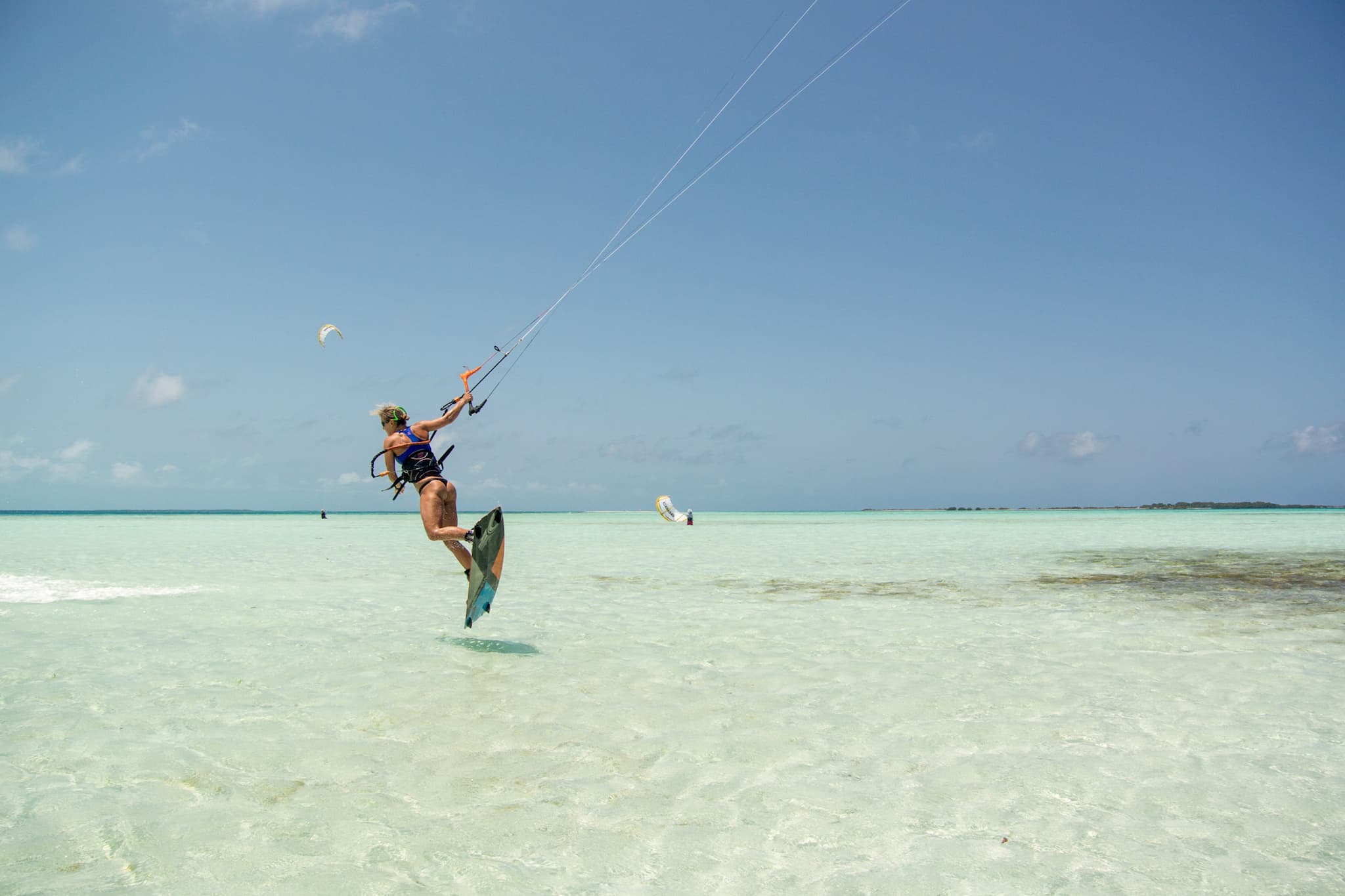
The Los Roques archipelago — a national park of coral atolls roughly 160 kilometres north of Caracas — is where Venezuelan seafood reaches its purest expression. Lobster here is abundant, relatively affordable (by international standards), and prepared simply: grilled with garlic butter, split and served with lime, or tossed into pasta. The lobster is Caribbean spiny lobster, pulled from the surrounding reefs, and the freshness is measured in the time it takes to walk from the dock to the kitchen. During lobster season, a grilled lobster lunch on Los Roques — eaten at a table on the sand, with the water ten meters away — runs $15-30 and is worth every cent.
---
Regional Specialties
Venezuela's geography creates distinct food regions. The Andes eat differently from the coast, the plains eat differently from the capital, and the western Zulia state has a culinary identity that borders on separatism. Here is what each region does that nowhere else does.
18. The Andes: Trout, Soups, and Mountain Cheese
Merida and the surrounding Andean region have a cuisine shaped by altitude. The mornings are cold. The body needs fuel. The food responds.
Trucha andina — Rainbow trout farmed in mountain streams and cold-water ponds above 2,000 metres. Served pan-fried with garlic, grilled, or smoked. The flesh is firm, clean, faintly pink, and tastes like the cold water it grew in. Trout restaurants line the roads through the Merida highlands, and the best ones let you pick your fish from the pond.
Pisca andina — The Andean breakfast soup: a clear potato broth with a poached egg floating in it, crumbled fresh cheese, and generous cilantro. It is altitude medicine, hangover cure, and comfort food in a single bowl. Eaten at dawn in Merida markets, steam rising from the bowl in the cool mountain air, it is the most grounding way to start a day in Venezuela.
Mute andino — A hearty tripe-and-vegetable soup that is essentially the Andean answer to menudo. Thick, deeply flavored, and warming in a way that makes sense above 1,500 metres. Not for the timid, but deeply satisfying.
For the full Merida experience, see our Merida travel guide.
19. Zulia: Maracaibo's Own Cuisine
Western Venezuela — Zulia state, centered on the city of Maracaibo — has a food culture that is noticeably different from the rest of the country. The heat is intense (Maracaibo is one of the hottest cities in South America), the lake is everywhere, and the cooking reflects both.
Patacon maracucho — Two large, flat patacones used as buns, filled with shredded beef, cheese, lettuce, tomato, and sauces. A sandwich where the bread is fried plantain. It is starchier, heavier, and more satisfying than it has any right to be.
Mojito en coco — Not the cocktail. A fish stew cooked in coconut milk with yuca, plantain, and spices. The coconut makes it rich and slightly sweet, the fish falls apart into the broth, and the yuca absorbs everything. This is Zulia's contribution to the national seafood canon, and it is excellent.
Conejo en coco — Rabbit braised in coconut milk. Yes, rabbit. Zulia eats rabbit. The meat is lean and mild, the coconut tenderizes it into something almost velvety, and the sauce demands rice to soak it up.
20. The Eastern Coast: Cazón and Coconut
The coastline from Margarita through Sucre state has a seafood tradition flavored by coconut, sofrito, and proximity to Trinidad. The empanada de cazon (covered above) is the headline, but the region also produces excellent hervido de pescado — a fish soup with root vegetables (yuca, ocumo, auyama) that is the eastern answer to the west's mojito en coco. Coconut sauces appear on grilled fish, and the general approach is: whatever came off the boat, cook it simply, and bring it to the table fast.
21. The Llanos: Fire and Beef
The Venezuelan llanos — the vast plains stretching south of the coastal mountains — are cattle country, and the cooking reflects a ranching culture that has changed little in centuries.
Carne en vara — Beef ribs and large cuts impaled on wooden stakes and slow-roasted over open fire for hours. The wood smoke permeates the meat, the fat renders and bastes as it cooks, and the result is beef with a crust of char and salt and an interior that is pink, tender, and intensely flavored. This is not a restaurant dish — it is a campfire tradition, prepared at ranches and river gatherings across the plains. If you visit a hato (cattle ranch) in the llanos, you will eat this.
Mamona — A specific preparation of young calf, roasted whole or in large sections over open coals. The meat is leaner and more delicate than mature beef, and the slow roasting over wood gives it a smokiness that more refined cooking methods cannot achieve.
22. Caracas: Everything, All at Once
The capital does not have a single regional cuisine because it has absorbed all of them. Caracas is where a Zuliano restaurant operates next to an Andean trout house next to a Margarita-style seafood joint next to an Italian place run by the grandchildren of post-war immigrants. The city also has Venezuela's most ambitious fine dining scene, where young chefs reinterpret traditional dishes with modern techniques — though the best traditional restaurants remain stubbornly excellent and show no interest in innovation.
For visitors, Caracas is the best single city to eat Venezuelan food comprehensively. The mercados — Mercado de Chacao, Mercado de Quinta Crespo — are the starting points. Start early, eat constantly, and do not make dinner reservations for your first night. You will already be full.
See our Caracas travel guide for dining neighborhoods and specific recommendations.
---
Drinks
23. Coffee
Venezuela grows excellent coffee and treats it with a casualness that would horrify specialty coffee culture — which is part of its charm. The country's coffee vocabulary is its own:
Negrito — A small, strong, black espresso. The default. You order a negrito at a bakery counter at 6am and it arrives in a tiny cup, dense and faintly sweet (sugar is often added during brewing unless you specify sin azucar).
Marron — Espresso with a splash of milk. Brown, hence the name. The most popular order in the country.
Marroncito — A smaller marron. Even more concentrated.
Guayoyo — Filtered coffee, lighter and longer than espresso. This is what your grandmother makes in a cloth filter (colador) at home. It is weaker than espresso but more aromatic, and drinking it is an act of nostalgia for every Venezuelan.
Con leche (cafe con leche) — Coffee with generous milk. The breakfast standard. Served in a larger cup, often with a cachito or a pastelito alongside.
Coffee is embedded in every transaction. You visit someone's home, you are offered coffee. You arrive at a business meeting, coffee appears. You stand at a bakery counter at 3pm, you drink coffee. It costs $0.25-1.00 almost everywhere and it is, without exception, offered before it is requested.
24. Polar Beer, Venezuelan Rum, and Papelón con Limón
Polar is the national beer. There is no debate about this. The Polar brewery — Empresas Polar, founded in 1941 — produces Pilsen (the standard lager, light and crushable), Solera (a slightly more complex pilsner), Ice (stronger), and Light (for the disciplined). Polar Pilsen is what you drink with your fried fish on the beach, at the barbecue, watching baseball, and at all other moments that require a cold beer in a hot country. It is not a craft beer. It does not need to be.
Venezuelan rum is world-class and underpriced. Diplomatico Reserva Exclusiva has won international spirits competitions and costs a fraction abroad of what equivalent aged rums command. Santa Teresa 1796 is smooth, complex, and made by a family that has been distilling in Aragua state since the 1700s. Cacique is the everyday rum — mixed with Coca-Cola or juice, it is the baseline spirit at every gathering. If you like rum at all, Venezuela is paradise.
Papelón con limón — The people's drink. Papelón (unrefined cane sugar, sold in solid blocks) is dissolved in water and mixed with fresh lime juice. It is served ice-cold, slightly gritty from the unrefined sugar, and deeply refreshing. Street vendors sell it from plastic coolers for almost nothing. It has been the Venezuelan equivalent of lemonade for centuries, and it is better than lemonade.
Fresh juices — Venezuelan juice culture is prolific. Every restaurant and street vendor offers jugos naturales: parchita (passion fruit — tart, intense, best with a little sugar), guanabana (soursop — creamy, tropical, indescribable to anyone who has not tasted it), patilla (watermelon), lechosa (papaya), and tamarindo (tamarind — sweet-sour and immediately addictive). The juices are made fresh, usually with water or milk, and cost $0.50-2.00.
Malta — A sweet, non-alcoholic malt beverage. Dark, thick, with a flavor somewhere between molasses, bread, and caramel. Venezuelans drink it cold as a restorative, mixed with condensed milk as an indulgence, or give it to children as a treat. It is one of those things you either accept completely or do not understand at all. Try it. Form your own opinion.
---
Desserts & Sweets
25. Quesillo, Tres Leches, and the Rest
Quesillo — Venezuelan flan, but do not call it flan within earshot of a Venezuelan. Quesillo is denser, more caramelized, and has a texture closer to cheesecake than to the jiggly Spanish flan. Made with whole eggs (not just yolks), condensed milk, vanilla, and a thick layer of caramelized sugar that becomes the sauce when the dish is inverted. The bottom (which becomes the top) should be a deep amber with a slight bitterness from the caramel. Every Venezuelan family makes quesillo for gatherings, and the competition for best quesillo is second only to the competition for best hallaca. It is usually served cold, in slices, and it should be dense enough to hold its shape on the plate.
Tres leches — The three-milk cake (evaporated milk, condensed milk, whole milk or cream) is not uniquely Venezuelan, but Venezuelans have adopted it with a devotion that borders on ownership. The sponge cake absorbs the milk mixture until it is saturated but not soggy — the line between perfect and overdone is narrow, and Venezuelan bakers walk it with confidence. Topped with merengue or whipped cream. Found at every bakery, every birthday, every celebration.
Dulce de lechosa — Green papaya simmered in a heavy sugar syrup with cinnamon and cloves until it turns translucent, amber-colored, and impossibly sweet. This is a Christmas dessert, served alongside hallacas, and the syrup is flavored with whole spices that perfume it with warmth. The papaya softens but retains enough structure to be eaten in strips. A bowl of dulce de lechosa with a slice of white cheese is December in Venezuela, distilled to a dessert.
Bienmesabe — A coconut cream cake that translates literally as "tastes good to me." Layers of sponge cake soaked in coconut cream, topped with meringue. It is sweet enough to recalibrate your sugar threshold, rich enough that a thin slice is sufficient, and good enough that you will cut a second slice anyway.
Cocada — Coconut candy made from grated coconut cooked in sugar until it forms dense, chewy bars or rounds. Sold at markets and roadside stands, especially on Margarita Island and the eastern coast. Simple, aggressively coconut-forward, and satisfying in the way that only a sugar-and-one-ingredient candy can be.
Venezuelan chocolate — The country's cacao is among the finest on earth, and this is not marketing — it is agronomy. The criollo and trinitario cacao varieties grown in Venezuela's coastal valleys produce flavor profiles (floral, fruity, low bitterness) that European and Japanese chocolatiers pay premium prices to access. The key regions: Chuao (a coastal village near Choroni accessible only by boat, producing what many consider the world's finest cacao), Porcelana (from Sur del Lago, near the Colombian border, prized for its delicate, almost white beans), and Sur del Lago generally, where the microclimate produces consistently excellent cacao. Venezuelan-made single-origin chocolate bars are available in Caracas shops and at hacienda visits — see our Choroni guide for cacao hacienda tours.
---
Where to Eat: By Budget
Venezuelan food is remarkably affordable by international standards. The currency situation has made dollar-holders relatively wealthy, and the food quality-to-price ratio is among the best in Latin America.
| Budget Level | Where | What to Expect | Price Range |
|---|---|---|---|
| Street food | Carts, market stalls, roadside stands | Arepas, empanadas, pepitos, cachapas, juices | $0.50-3 per item |
| Comedores & lunch spots | Small restaurants serving almuerzo (set lunch) | Soup + main plate (usually pabellon, pollo, or fish) + juice | $3-8 per meal |
| Mid-range restaurants | Sit-down restaurants with menus | Full meals, seafood, regional specialties, beer/wine | $8-20 per person |
| Fine dining (Caracas) | Chef-driven restaurants in Las Mercedes, Altamira, El Hatillo | Tasting menus, reinterpreted Venezuelan cuisine, wine pairings | $20-50 per person |
Practical notes: Street food and comedores are cash-only (USD accepted, bolivares preferred for small amounts). Mid-range and fine dining usually accept cards but always carry cash as backup. Tipping is not obligatory but 10% is appreciated at sit-down restaurants. Many restaurants add a 10% service charge (servicio) to the bill automatically — check before doubling up.
---
Venezuelan Food Vocabulary
You do not need fluent Spanish to eat well in Venezuela, but knowing these terms will make ordering faster, more precise, and more rewarding.
| Spanish | English | Context |
|---|---|---|
| Arepa | Corn cake/pocket | The staple — point at one and say the filling |
| Caraotas | Black beans | The bean of Venezuela, always black unless specified |
| Tajadas | Fried sweet plantain | The ripe ones, yellow and caramelized |
| Tostones / Patacones | Fried green plantain | The savory ones, double-fried |
| Queso blanco | White cheese | Fresh, salty, crumbly — on everything |
| Queso de mano | Hand cheese | Soft, stretchy — the cachapa partner |
| Carne mechada | Shredded beef | Braised and pulled, the pabellon protein |
| Pabellon | National dish | Beef + beans + rice + plantain (order "a caballo" for egg) |
| Guasacaca | Avocado sauce | Venezuela's salsa verde, served with everything fried |
| Sofrito | Flavor base | Onion, garlic, pepper, tomato — the start of every stew |
| Papelón | Unrefined cane sugar | Sold in blocks, used in drinks and sweets |
| Hervido | Boiled soup/stew | Chicken (pollo) or fish (pescado) with root vegetables |
| Parrilla | Grill | Grilled meats, usually mixed cuts |
| Jugo natural | Fresh juice | Specify the fruit: parchita, guanabana, patilla |
| Sin azucar | Without sugar | Essential if you want your coffee or juice unsweetened |
| Para llevar | To go | For empanadas and arepas on the move |
| La cuenta | The check | When you are ready to leave |
| Desayuno | Breakfast | Usually arepas, empanadas, or cachitos + coffee |
| Almuerzo | Lunch | The big meal — set menus (menu del dia) are common |
| Cena | Dinner | Lighter than lunch for most Venezuelans |
---
Frequently Asked Questions
Are there vegetarian options in Venezuelan food?
More than you might expect. The arepa de domino (beans and cheese) is vegetarian. Cachapas are vegetarian. Empanadas de queso (cheese) and caraota (black bean) are vegetarian. Tostones, patacones, and tajadas are vegetarian. Most restaurants will prepare rice, beans, plantain plates without meat if you ask. That said, Venezuela is a meat-centric food culture, and dedicated vegetarian restaurants are rare outside Caracas. The phrase "soy vegetariano/a, sin carne por favor" (I am vegetarian, no meat please) will get you far.
Is street food safe to eat?
Generally, yes — with the common-sense precautions that apply to street food anywhere. Eat at stalls with high turnover (food is not sitting around). Fried items are safer than raw ones. Empanadas and arepas from busy vendors are cooked to order and served hot. Avoid salads and uncooked vegetables at street stalls if your stomach is sensitive. Drink bottled water. That said, Venezuelans eat street food daily, and the standards at popular stands are maintained by reputation and repeat customers.
What time do Venezuelans eat?
Breakfast: 6-9am. Arepas, empanadas, cachitos, coffee. This is a serious meal, not a continental afterthought.
Lunch (almuerzo): 12-2pm. The main meal of the day. Many workplaces take a full hour. Restaurants offer "menu del dia" (set lunch) with soup, main course, and juice for $3-8.
Dinner (cena): 7-9pm. Lighter than lunch for most families — often arepas again, or leftovers. Restaurants serve full dinners, but the cultural emphasis is on lunch.
Late-night: 10pm-2am. Areperas and pepito stands thrive after dark, especially on weekends. The 1am arepa is a Venezuelan institution.
Do I need to tip?
Tipping is appreciated but not culturally mandatory the way it is in the United States. At sit-down restaurants, 10% is generous and welcomed. Many restaurants add a 10% "servicio" charge to the bill — check before adding more. At street stalls and bakeries, tipping is not expected. For exceptional service, tip what feels right. Cash tips in USD are always appreciated.
What should I eat on my first day?
Start with an arepa reina pepiada for breakfast from a busy arepera. Have a cachapa con queso de mano for a mid-morning snack if you pass a cachapera. Eat a pabellon criollo a caballo for lunch at a comedor. Buy a fresh juice (parchita) from a street vendor in the afternoon. Have tequeños with guasacaca and a Polar beer before dinner. End with quesillo for dessert. You will have covered more culinary ground in one day than most travelers cover in a week, and you will understand why Venezuelans talk about food the way they do.
Where can I find hallacas outside of December?
Increasingly, restaurants in Caracas and major cities serve hallacas year-round. Markets sometimes have vendors who make them on weekends. But the reality is that the best hallacas are homemade and seasonal. If you are in Venezuela during December, you will be offered them everywhere. If you are visiting at other times, ask at restaurants — some keep them on the menu, especially those catering to visitors. The year-round versions are good. The December versions, made by families who have been making them together for decades, are transcendent.
I have food allergies — how do I communicate them?
"Soy alergico/a a [ingredient]" (I am allergic to [ingredient]) is the essential phrase. Common allergens in Venezuelan cooking: wheat flour (empanadas are corn-based, but pastelitos, cachitos, and tequeños use wheat), dairy (cheese is on everything — specify "sin queso" if needed), and shellfish (coastal dishes). Nut allergies are less of a concern as nuts are not a major component of Venezuelan cooking. Gluten-free travelers will find that the corn-based staples — arepas, empanadas, cachapas — are naturally gluten-free, though cross-contamination in kitchens is possible.
What about Venezuelan breakfast?
Venezuelan breakfast is a real meal. Forget the European coffee-and-toast approach. A typical Venezuelan breakfast includes arepas with various fillings, empanadas, or cachitos (ham-filled rolls), accompanied by fresh juice or coffee with milk. In the Andes, you might start with pisca andina (potato-egg-cilantro soup). On the coast, fried fish with tostones can appear at breakfast. The meal is substantial because the culture expects it to be — you are fueling a morning, not performing a ritual.
---
Eat Your Way Across Venezuela
Venezuelan food is not a single cuisine — it is a collection of regional traditions held together by corn, plantain, beans, and a national conviction that eating well is not a luxury but a baseline expectation. The arepa vendor on a Caracas street corner takes as much pride in her product as the chef at a fine dining restaurant in Las Mercedes, and both of them would be offended by a mediocre version of what they make.
The best way to eat in Venezuela is to eat constantly, eat locally, and eat what the person next to you is eating. Ask the taxi driver where he eats breakfast. Ask the hotel receptionist where she buys empanadas. Ask the fisherman's wife which restaurant buys from her husband. The answers will lead you to food that no guidebook can fully describe, because the best Venezuelan food is not in restaurants — it is in the accumulated knowledge of a country that has been cooking this way for centuries and shows no signs of stopping.
Start planning your trip with our AI trip planner, or browse hundreds of curated listings to find restaurants, food experiences, and dining recommendations across Venezuela.
Written by VAV Editorial
Last updated: August 12, 2026